What Is Alcohol Addiction?
Alcohol addiction — clinically termed alcohol use disorder (AUD) — is a chronic brain condition characterized by an inability to control alcohol consumption despite negative consequences. The National Institute on Alcohol Abuse and Alcoholism (NIAAA) defines AUD as a medical condition that occurs when a person's drinking causes distress or harm.
Alcohol is the most commonly used addictive substance in the United States. According to the 2021 NSDUH, approximately 29.5 million Americans aged 12 and older had an alcohol use disorder — yet fewer than 8% received any treatment. Alcohol is the third leading preventable cause of death in the U.S., contributing to approximately 140,000 deaths annually.
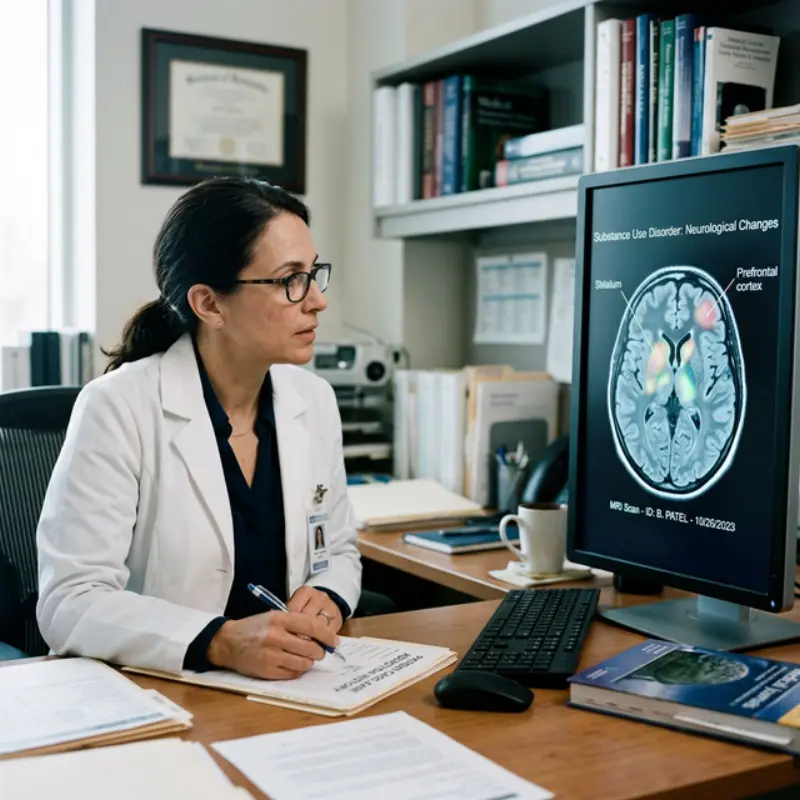
How Alcohol Affects the Brain
Alcohol acts as a central nervous system depressant through multiple mechanisms:
- Enhances GABA — increases inhibitory neurotransmitter activity, causing sedation and relaxation
- Inhibits glutamate — suppresses excitatory neurotransmission, slowing brain activity
- Stimulates dopamine release — activates the reward circuit, reinforcing drinking behavior
- Releases endorphins — produces feelings of pleasure and reduces pain perception
Chronic alcohol use causes neuroadaptation: the brain increases glutamate (excitatory) activity and decreases GABA (inhibitory) activity to compensate. When alcohol is removed, this imbalance causes the dangerously heightened brain activity seen in alcohol withdrawal — including seizures and delirium tremens.
Signs of Alcoholism
- Drinking more or longer than intended
- Repeated unsuccessful attempts to cut down
- Spending substantial time drinking or recovering from its effects
- Craving alcohol — strong urges to drink
- Drinking interfering with work, school, or family obligations
- Continuing to drink despite relationship problems it causes
- Giving up activities you once enjoyed in favor of drinking
- Drinking in physically dangerous situations (driving, swimming)
- Continuing despite health problems caused or worsened by alcohol
- Needing more alcohol to get the same effect (tolerance)
- Withdrawal symptoms when not drinking (sweating, nausea, anxiety, tremors)
Stages of Alcoholism
| Stage | Characteristics |
|---|---|
| Early stage | Increased tolerance, drinking to relieve stress, occasional blackouts, rationalizing drinking behavior |
| Middle stage | Loss of control, withdrawal symptoms, drinking despite consequences, work/relationship problems, hiding drinking |
| Late stage | Physical deterioration, organ damage, drinking to avoid withdrawal, social isolation, potential for delirium tremens |
Health Consequences
- Liver disease — fatty liver, alcoholic hepatitis, fibrosis, cirrhosis (irreversible scarring)
- Cardiovascular — cardiomyopathy, arrhythmias, hypertension, stroke
- Cancer — increased risk of mouth, throat, esophageal, liver, breast, and colorectal cancer
- Pancreas — pancreatitis (acute and chronic)
- Neurological — Wernicke-Korsakoff syndrome (thiamine deficiency), neuropathy, cognitive impairment
- Immune system — increased susceptibility to pneumonia, tuberculosis, and other infections
- Mental health — depression, anxiety, increased suicide risk
- Fetal alcohol spectrum disorder — if consumed during pregnancy
Alcohol Withdrawal
Alcohol withdrawal can be medically dangerous and potentially fatal. Unlike most drug withdrawals, alcohol withdrawal can cause seizures and death:
- 6–12 hours: Tremors, anxiety, nausea, insomnia, sweating
- 12–24 hours: Hallucinations (visual, auditory, or tactile)
- 24–48 hours: Risk of withdrawal seizures
- 48–72 hours: Delirium tremens (DTs) — confusion, rapid heartbeat, high blood pressure, fever; fatal in 5–15% of untreated cases
Medical detox is essential. Never attempt to quit heavy, long-term alcohol use without medical supervision.
Treatment Options
- Medical detoxification — supervised withdrawal with benzodiazepines for seizure prevention
- Inpatient rehabilitation — 30–90 day residential programs
- Outpatient programs — IOP and standard outpatient therapy
- Behavioral therapies — CBT, motivational enhancement therapy (MET), 12-step facilitation
- Support groups — AA, SMART Recovery, Women for Sobriety, LifeRing
Medications for Alcohol Addiction
| Medication | How It Works | Administration |
|---|---|---|
| Naltrexone | Blocks opioid receptors — reduces cravings and the rewarding effects of alcohol | Daily pill or monthly Vivitrol injection |
| Acamprosate (Campral) | Restores glutamate/GABA balance disrupted by chronic drinking | Oral, 3 times daily |
| Disulfiram (Antabuse) | Causes severe nausea, flushing, and headache if alcohol is consumed — deterrent | Daily oral tablet |
Alcohol Addiction Statistics
- 29.5 million Americans had an alcohol use disorder in 2021 (NSDUH)
- Approximately 140,000 people die from alcohol-related causes annually in the U.S. (CDC)
- Only 7.6% of people with AUD received any treatment
- Alcohol misuse costs the U.S. economy $249 billion annually
- 10.5% of children live with a parent who has an alcohol problem (SAMHSA)
- Genetics account for approximately 50% of AUD risk
Frequently Asked Questions
How much drinking is considered alcoholism?
The NIAAA defines heavy drinking as more than 4 drinks per day or 14 per week for men, and more than 3 per day or 7 per week for women. However, alcoholism (alcohol use disorder) is diagnosed based on behavior patterns — not just quantity. Meeting 2 or more of the 11 DSM-5 criteria indicates an alcohol use disorder, regardless of the specific amount consumed.
Is alcoholism genetic?
Research shows that genetics account for approximately 50% of the risk for alcohol use disorder. Having a first-degree relative with alcoholism increases your risk 3–4 times. However, genetics alone do not determine whether someone becomes an alcoholic — environmental factors, mental health, stress, and social influences all play significant roles.
Can you die from alcohol withdrawal?
Yes. Alcohol withdrawal can be life-threatening. Severe withdrawal can cause delirium tremens (DTs), which includes seizures, hallucinations, dangerous changes in blood pressure and heart rate, and can be fatal in 5–15% of untreated cases. This is why medical detox is strongly recommended for anyone with moderate to severe alcohol dependence.
What is the difference between alcohol abuse and alcoholism?
Alcohol abuse refers to a pattern of drinking that results in harm — health problems, neglecting responsibilities, or legal issues — but may not involve physical dependence. Alcoholism (alcohol use disorder) includes physical dependence, withdrawal symptoms, tolerance, and compulsive drinking despite negative consequences. The DSM-5 now uses a single diagnosis — alcohol use disorder — on a spectrum from mild to severe.
How long does it take to develop alcohol addiction?
There is no fixed timeline. Some people develop alcohol use disorder within months of heavy drinking, while others drink heavily for years before developing dependence. Risk factors that accelerate addiction include starting drinking before age 15, binge drinking patterns, family history, mental health conditions, and using alcohol to cope with stress or trauma.
Can an alcoholic ever drink normally again?
For most people diagnosed with moderate to severe alcohol use disorder, controlled or "normal" drinking is not considered a realistic long-term goal by major addiction medicine organizations. NIAAA research shows that the vast majority of people who achieve sustained recovery do so through complete abstinence. A small minority with mild AUD may be able to moderate, but this is not recommended as a treatment goal for most.
What medications treat alcohol addiction?
Three FDA-approved medications treat alcohol use disorder: Naltrexone (oral or monthly Vivitrol injection) blocks opioid receptors and reduces the rewarding effects of alcohol and cravings. Acamprosate (Campral) helps restore brain chemistry disrupted by chronic drinking. Disulfiram (Antabuse) causes unpleasant reactions (nausea, flushing) when alcohol is consumed, serving as a deterrent.
How does alcohol addiction affect the body long-term?
Chronic alcohol use damages virtually every organ system: liver disease (fatty liver → hepatitis → cirrhosis), cardiovascular disease (cardiomyopathy, hypertension, stroke), pancreatitis, increased cancer risk (mouth, throat, liver, breast, colon), immune suppression, neurological damage (Wernicke-Korsakoff syndrome), and mental health disorders. Alcohol is the third leading preventable cause of death in the United States.
Sources & References
- NIAAA. Alcohol Use Disorder: A Comparison Between DSM-IV and DSM-5. niaaa.nih.gov
- SAMHSA. 2021 NSDUH. samhsa.gov
- CDC. Alcohol and Public Health: Alcohol-Related Disease Impact. cdc.gov
- NIAAA. Understanding Alcohol Use Disorder. niaaa.nih.gov
- Schuckit MA. Alcohol-use disorders. The Lancet. 2009;373(9662):492-501.