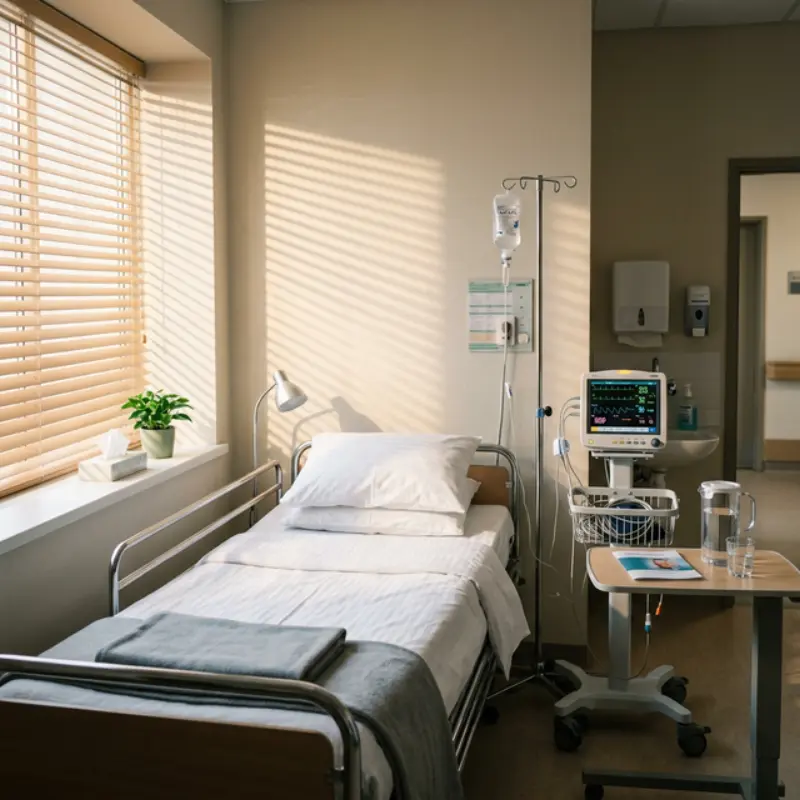
What Is Inpatient Rehab?
Inpatient rehabilitation (also called residential treatment) provides round-the-clock, structured care in a supervised facility. You live at the treatment center for the duration of your program — typically 30–90 days — receiving intensive therapy, medical support, and peer community in an environment removed from the triggers of daily life.
Inpatient rehab is considered the most intensive level of addiction treatment outside of hospital-based medical detox. It provides the structure, accountability, and immersive therapeutic environment that many people need — especially during early recovery when relapse risk is highest.
Who Needs Inpatient Treatment?
The ASAM Criteria recommends inpatient care when:
- Severe substance use disorder — long-term, heavy use
- Co-occurring mental health conditions — depression, anxiety, PTSD, bipolar
- Unsafe or unstable home environment — living with active users, homelessness
- Previous outpatient treatment was insufficient
- Medical complications requiring monitoring
- Polysubstance use — using multiple substances
- High relapse risk — unable to maintain sobriety in community setting
What to Expect
- Intake and assessment — medical evaluation, psychiatric assessment, treatment plan development
- Detox (if needed) — medical withdrawal management, typically 3–7 days
- Intensive treatment — daily therapy (individual and group), psychoeducation, skills building
- Family involvement — family therapy sessions, education programs
- Discharge planning — aftercare plan, outpatient referrals, support group connections, sober living arrangements
Types of Inpatient Programs
| Type | Description | Best For |
|---|---|---|
| Standard residential | Group setting, structured schedule, 30–90 days | Most substance use disorders |
| Hospital-based | Medical facility, 24/7 medical staff | Complex detox, dual diagnosis, severe medical needs |
| Dual diagnosis | Treats addiction and mental health simultaneously | Co-occurring disorders |
| Long-term residential | 6–12 months, therapeutic community model | Chronic relapse, severe social dysfunction |
| Gender-specific | All-male or all-female programs | Gender-specific trauma, comfort preference |
A Typical Day
| Time | Activity |
|---|---|
| 7:00 AM | Wake up, personal hygiene, breakfast |
| 8:00 AM | Morning meditation or group check-in |
| 9:00 AM | Group therapy session |
| 10:30 AM | Psychoeducation class |
| 12:00 PM | Lunch, free time |
| 1:00 PM | Individual therapy or clinical appointment |
| 2:30 PM | Group therapy or skills workshop |
| 4:00 PM | Recreation / exercise / holistic activity |
| 5:30 PM | Dinner |
| 7:00 PM | 12-step or support group meeting |
| 8:30 PM | Journaling, free time, phone calls |
| 10:00 PM | Lights out |
Evidence-Based Therapies
- Cognitive-Behavioral Therapy (CBT) — identifying and changing addictive thought patterns
- Dialectical Behavior Therapy (DBT) — emotion regulation, distress tolerance
- Motivational Interviewing (MI) — strengthening internal motivation
- EMDR — trauma processing
- Contingency Management — reinforcement-based incentives for abstinence
- Group therapy — peer processing and accountability
- Family therapy — systemic healing, communication skills
- Medication-Assisted Treatment (MAT) — when indicated
Duration & Outcomes
- 30-day programs — foundational; best when followed by step-down care
- 60-day programs — allow deeper therapeutic work
- 90-day programs — NIDA recommended minimum; strongest outcomes
- Research shows each additional month of treatment increases 1-year sobriety rates
- Completing treatment (vs. leaving early) is the strongest predictor of recovery success
Cost & Insurance
- ACA requires all marketplace plans to cover substance use treatment
- Medicaid covers addiction treatment in all 50 states
- Medicare covers inpatient rehab
- Private insurance typically covers 30 days with pre-authorization
- Many facilities offer sliding scale and payment plans
- State-funded programs available for those without insurance
- Call SAMHSA: 1-800-662-4357 for help finding affordable options
After Inpatient: Continuing Care
- Step-down to outpatient program (IOP or standard outpatient)
- Sober living home — structured, substance-free housing
- Support groups — AA, NA, SMART Recovery
- Ongoing therapy — individual sessions
- Relapse prevention plan maintenance
- MAT continuation if applicable
Frequently Asked Questions
How long is inpatient rehab?
Programs range from 28–30 days (standard) to 60–90+ days (extended). Research consistently shows that longer treatment produces better outcomes. NIDA recommends a minimum of 90 days of total treatment (which may include inpatient followed by outpatient). The appropriate length depends on severity of addiction, co-occurring disorders, and individual progress.
Can I have my phone in rehab?
Phone policies vary by facility. Many programs limit or restrict phone access during the first 1–2 weeks to minimize distractions and external triggers. After the initial period, most programs allow scheduled phone calls with approved contacts. Some facilities allow phones with restrictions. The goal is to help you focus fully on recovery without outside pressure or temptation.
What should I bring to rehab?
Typically: comfortable clothing (7–14 days), toiletries, medications (in original bottles with prescriptions), insurance cards, ID, a journal, comfortable shoes for exercise, and any medical records. Don't bring: weapons, drugs/alcohol, valuables, excessive cash, revealing clothing, or items that vary by facility (contact the center for their specific list). Most facilities provide bedding and towels.
Can I leave rehab if I want to?
In most cases, yes — voluntary admission means you can leave at any time (AMA — Against Medical Advice). However, leaving early is strongly discouraged as it significantly reduces treatment effectiveness. Staff will explain the risks and may ask you to sign an AMA form. Court-ordered treatment may have different requirements. If you're considering leaving, talk to your counselor about your concerns first.
How much does inpatient rehab cost?
Costs vary widely: $5,000–$10,000/month for basic programs, $10,000–$30,000/month for mid-range, and $30,000–$100,000+ for luxury facilities. However, the ACA requires all marketplace insurance plans to cover substance use treatment. Medicaid covers treatment in all 50 states. Many facilities offer sliding-scale fees, scholarships, or payment plans. SAMHSA's helpline (1-800-662-4357) helps locate affordable options.
Will my employer find out I went to rehab?
Your treatment records are protected by federal law (42 CFR Part 2) and HIPAA. Employers cannot access your treatment records without your written consent. The FMLA provides up to 12 weeks of unpaid, job-protected leave for substance use treatment. The ADA may also provide protections. Some employers offer Employee Assistance Programs (EAPs) that facilitate confidential treatment access.
What is the success rate of inpatient rehab?
Success rates vary by definition and measurement. According to NIDA, approximately 40–60% of people relapse at some point, which is similar to other chronic diseases. Studies show that completing an inpatient program significantly improves outcomes compared to no treatment. Longer programs (90+ days) and those including aftercare have the best outcomes. Success is best measured over years, not months.
What is the difference between inpatient and residential treatment?
The terms are often used interchangeably. Technically, inpatient treatment refers to hospital-based programs with 24-hour medical supervision (used for complex detox or dual diagnosis). Residential treatment is community-based, providing 24-hour structure and support in a non-hospital setting. Both provide round-the-clock care. Residential programs are more common for standard addiction treatment.
Sources & References
- NIDA. Principles of Drug Addiction Treatment: A Research-Based Guide. nida.nih.gov
- ASAM. The ASAM Criteria: Treatment for Addictive, Substance-Related, and Co-Occurring Conditions.
- SAMHSA. National Survey of Substance Abuse Treatment Services (N-SSATS).
- Simpson DD, et al. Treatment retention and follow-up outcomes. J Subst Abuse Treat. 1997;14(1):73-80.