Why Support Groups Work
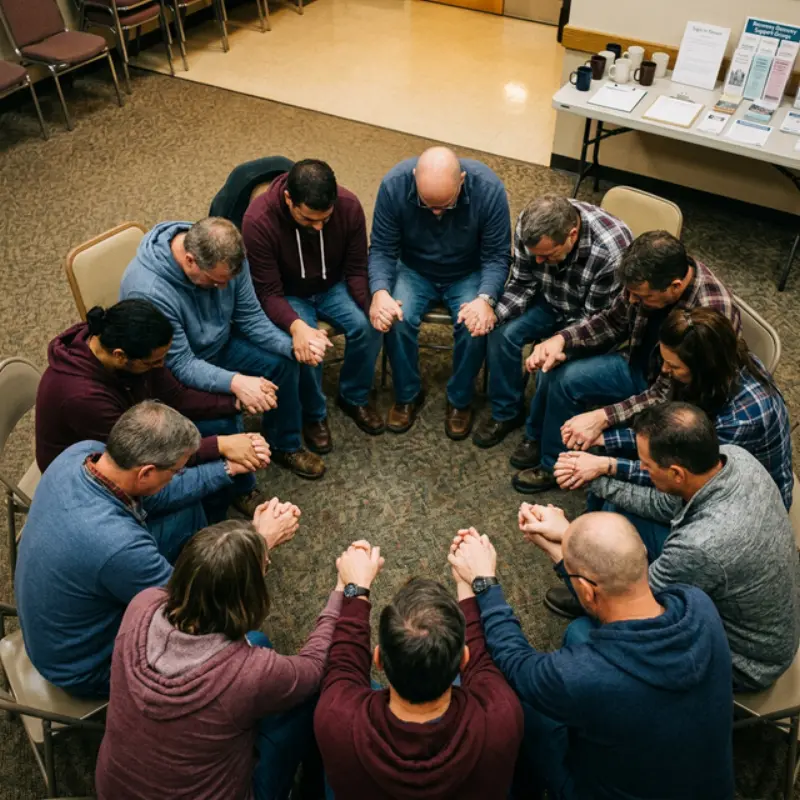
Support groups are one of the most effective tools in addiction recovery. Research consistently shows that peer support significantly improves outcomes — reducing relapse rates, improving quality of life, and increasing the likelihood of sustained long-term recovery. They work because of:
- Shared experience — knowing you're not alone eliminates shame and isolation
- Accountability — regular check-ins with people who understand
- Modeling — seeing others succeed in recovery provides hope and roadmap
- Social rebuilding — replacing using relationships with recovery relationships
- Free and accessible — available to everyone regardless of income
Types of Support Groups
| Type | Approach | Examples |
|---|---|---|
| 12-Step | Spiritual, step-based, sponsor system | AA, NA, CA, SAA, GA |
| Non-12-Step | Science-based, self-empowerment | SMART Recovery, LifeRing, SOS |
| Faith-Based | Christian or religious framework | Celebrate Recovery, The Salvation Army |
| Online | Digital communities and virtual meetings | r/stopdrinking, In The Rooms, AA Online |
| Family | For loved ones of addicted individuals | Al-Anon, Nar-Anon, CRAFT |
12-Step Groups
The 12-step model, originated by Alcoholics Anonymous in 1935, is the most widely available support group framework:
- Alcoholics Anonymous (AA) — 100,000+ groups worldwide; focuses on alcohol
- Narcotics Anonymous (NA) — addresses all drug addictions
- Cocaine Anonymous (CA) — specifically for cocaine and crack
- Gamblers Anonymous (GA) — for problem gambling
- Sex Addicts Anonymous (SAA) — for compulsive sexual behaviors
- Marijuana Anonymous (MA) — for cannabis use disorder
Non-12-Step Alternatives
- SMART Recovery — Self-Management and Recovery Training; uses CBT-based tools (smartrecovery.org)
- LifeRing Secular Recovery — empowers the "sober self"; no steps or sponsors (lifering.org)
- Secular Organizations for Sobriety (SOS) — non-religious alternative
- Refuge Recovery / Recovery Dharma — Buddhist-informed, mindfulness-based
- Women for Sobriety — addresses the unique needs of women in recovery
- Moderation Management — for people with mild alcohol problems who want to moderate (not for severe addiction)
Online Support Communities
- r/stopdrinking — Reddit community for alcohol recovery (400,000+ members)
- r/OpiatesRecovery — Reddit community for opioid recovery
- r/leaves — Reddit community for quitting cannabis
- r/pornfree — Reddit community for porn addiction recovery
- In The Rooms — virtual 12-step and recovery meetings (intherooms.com)
- SMART Recovery Online — virtual SMART meetings worldwide
Support Groups for Families
- Al-Anon / Alateen — for family and friends of alcoholics (al-anon.org)
- Nar-Anon — for family and friends of drug addicts
- CRAFT — Community Reinforcement and Family Training; evidence-based approach to motivating a loved one to seek treatment
- S-Anon — for partners and family of sex addicts
- Gam-Anon — for family of compulsive gamblers
How to Find a Meeting
- AA meetings: aa.org/find-aa
- NA meetings: na.org/meetingsearch
- SMART Recovery: smartrecovery.org/community
- SAMHSA Treatment Locator: findtreatment.samhsa.gov
- Google: search "[substance] recovery meeting near me"
What to Expect at Your First Meeting
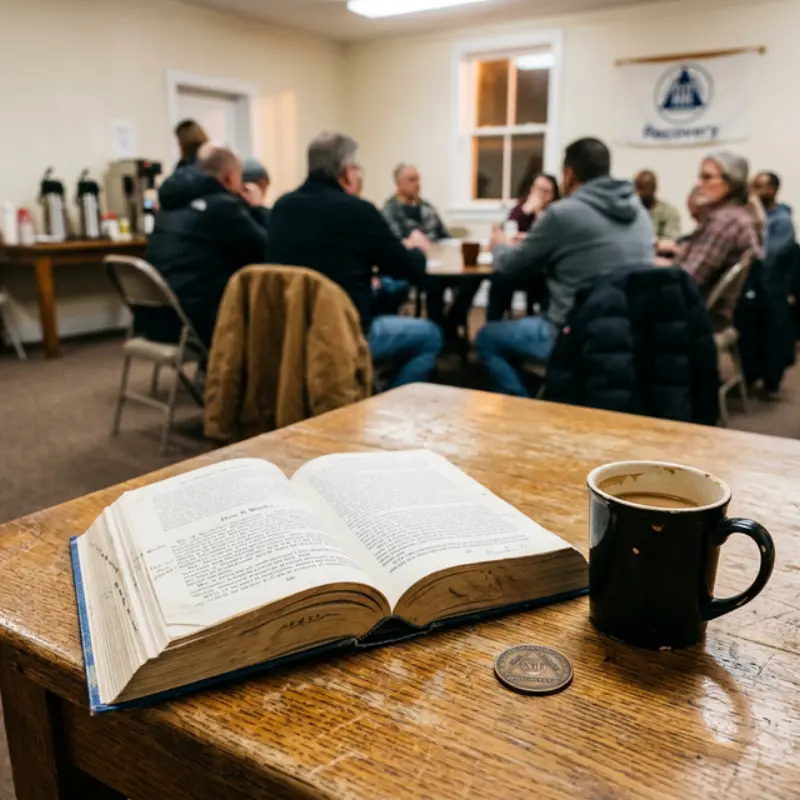
- Meetings typically last 60–90 minutes
- Someone will likely welcome you and introduce the format
- You are not required to speak — just listen
- Meetings may include: readings, shares (people telling their stories), discussion, announcements
- Open meetings welcome anyone; closed meetings are for people who identify as having the addiction
- Coffee is usually available
- You can leave at any time
- Everything shared is confidential
Frequently Asked Questions
Do I have to speak at a support group meeting?
No. At every support group, you can simply listen. It is common to say "I'm just here to listen today" or "I pass." No one will pressure you to share. Many people attend several meetings before feeling comfortable speaking. The only universal requirement is a desire to stop using or to address the issue the group focuses on.
Are support groups religious?
12-step programs reference a "Higher Power," which can be interpreted as any power greater than yourself — including the group itself, nature, or a personal concept. They are spiritual, not religious, and welcome people of all faiths and none. Non-12-step alternatives like SMART Recovery, LifeRing, and Secular Organizations for Sobriety are explicitly non-religious and evidence-based.
Are support groups free?
Most support groups are free. 12-step groups (AA, NA, CA) are entirely free and self-supporting through voluntary contributions. SMART Recovery meetings are free. Online communities (r/stopdrinking, r/OpiatesRecovery) are free. Some specialized programs (Refuge Recovery) may have suggested donations but do not require payment.
What is the difference between AA and NA?
Alcoholics Anonymous (AA) focuses specifically on alcohol addiction and uses the original 12 steps. Narcotics Anonymous (NA) is for people addicted to any drug (including alcohol) and uses adapted 12 steps. In practice, many people attend both. AA has more meetings available in most areas. NA tends to have a younger demographic and addresses polysubstance use more directly.
Can I attend a support group while on medication (MAT)?
Yes. All major support group organizations have official positions supporting medication-assisted treatment. NA World Services explicitly states that MAT is a personal medical decision. SMART Recovery actively supports MAT. Some individual meetings may have members with outdated views on MAT, but this is not reflective of official organizational policies. If you encounter stigma, try a different meeting.
How often should I attend meetings?
During early recovery (first 90 days), many programs recommend daily attendance ("90 meetings in 90 days"). After the initial period, most people stabilize at 2–4 meetings per week. The key is consistency — regular attendance is more important than frequency. Research shows that people who attend support groups regularly have significantly better outcomes than those who don't.
What if I don't like the first meeting I try?
This is extremely common — and experts recommend trying at least 6 different meetings before deciding if a group format works for you. Every meeting has a different culture, demographic, and feel. If 12-step doesn't resonate, try SMART Recovery or another alternative. The key is finding a group where you feel comfortable and supported.
Are meetings confidential?
Yes. Anonymity and confidentiality are foundational principles of all support groups. 12-step traditions explicitly state: "What you hear here, who you see here, let it stay here." Members are asked to protect each other's identity and what is shared in meetings. Breaking anonymity is considered a serious violation of group norms.
Sources & References
- Kelly JF, et al. Alcoholics Anonymous and other 12-step programs for alcohol use disorder. Cochrane Database Syst Rev. 2020;3:CD012880.
- SAMHSA. Peer Support Services. samhsa.gov
- AA General Service Office. A.A. Membership Survey. aa.org
- SMART Recovery. About SMART Recovery. smartrecovery.org