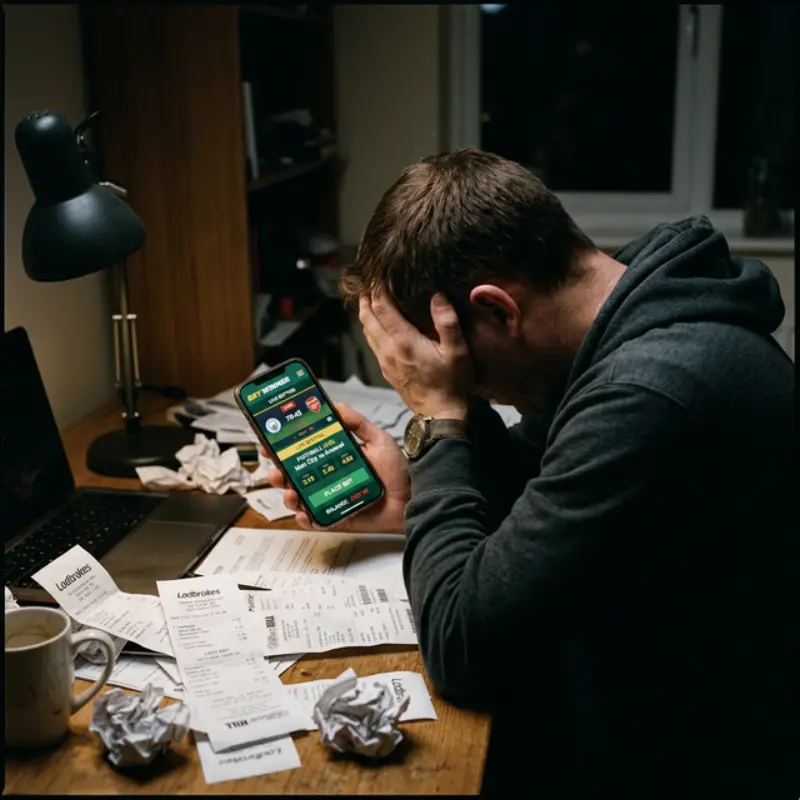
What Is Gambling Addiction?
Gambling addiction — clinically known as gambling disorder — is a behavioral addiction characterized by persistent and recurring problematic gambling behavior that leads to significant distress or impairment. It is the only behavioral addiction recognized alongside substance addictions in the DSM-5 (reclassified from impulse control disorder to addictive disorder in 2013).
According to the National Council on Problem Gambling, approximately 2–3% of Americans meet criteria for problem gambling, and about 1% meet criteria for severe gambling disorder. The proliferation of online gambling and sports betting apps since the 2018 Supreme Court PASPA ruling has significantly expanded access and raised concerns about increasing addiction rates.
How Gambling Affects the Brain
Neuroscience research has established that gambling disorder activates the same reward circuits as substance addictions:
- Dopamine surges — winning activates the mesolimbic dopamine pathway, reinforcing gambling behavior
- Near-miss effect — the brain responds to almost winning similarly to actual wins, maintaining engagement
- Variable reinforcement — unpredictable rewards create the strongest behavioral conditioning (same principle as slot machines)
- Downregulation — repeated stimulation desensitizes dopamine receptors, driving escalation of bets
- Prefrontal impairment — reduced impulse control and decision-making capacity (hypofrontality)
- Cognitive distortions — gambler's fallacy, illusion of control, selective memory for wins
Types of Gambling Addiction
| Type | Description | Key Risk Factors |
|---|---|---|
| Action gambling | Skill-based games (poker, sports betting) | Illusion of control, social reinforcement |
| Escape gambling | Chance-based games (slots, lottery) | Emotional numbing, dissociation from problems |
| Online gambling | Digital platforms, apps | 24/7 access, isolation, speed of play |
| Sports betting | Wagering on athletic events | Social normalization, micro-betting, apps |
Signs of Problem Gambling
- Needing to gamble with increasing amounts of money to achieve excitement
- Restlessness or irritability when trying to stop gambling
- Repeated unsuccessful attempts to control or stop gambling
- Preoccupation with gambling (planning next sessions, reliving past gambling)
- Gambling when feeling distressed (anxious, guilty, depressed)
- Chasing losses — returning to win back money after losing
- Lying to conceal the extent of gambling
- Jeopardizing relationships, job, or education because of gambling
- Relying on others for money to relieve financial situations caused by gambling
Risk Factors
- Age and gender — young men 18–34 are the highest risk demographic
- Mental health — co-occurring depression, anxiety, ADHD, or substance use disorders
- Personality traits — impulsivity, competitiveness, boredom susceptibility
- Family history — genetics contribute to approximately 50% of gambling disorder risk
- Early big win — a significant early gambling win can trigger compulsive gambling
- Access — proximity to casinos and availability of online gambling apps
Online Gambling and Sports Betting
The legalization of sports betting in most U.S. states since 2018 has created a rapidly growing addiction crisis:
- Americans wagered $93 billion on sports in 2022 — a 75% increase from 2021
- Gambling helpline calls increased 30%+ in states with newly legal sports betting
- Problem gambling rates among young men (18–34) have risen dramatically
- Mobile betting apps make it possible to place a bet in under 5 seconds
- Micro-betting (betting on individual plays within a game) dramatically increases speed and volume of bets
Health and Financial Consequences
- Financial: Debt, bankruptcy, home loss, stolen funds, destroyed credit
- Mental health: Depression, anxiety, substance abuse, suicidal ideation (15–20x general population rate)
- Relationships: Divorce, family breakdown, domestic violence, social isolation
- Legal: Fraud, embezzlement, theft, incarceration
- Physical: Stress-related illness, sleep disorders, poor self-care
- Occupational: Job loss, absenteeism, reduced productivity
Treatment Options
- Cognitive-Behavioral Therapy (CBT) — addressing cognitive distortions (gambler's fallacy, illusion of control) and developing coping strategies
- Motivational Interviewing (MI) — building internal motivation to change
- Gamblers Anonymous (GA) — 12-step fellowship specifically for gambling addiction
- Financial counseling — debt management, budgeting, financial recovery planning
- Self-exclusion programs — voluntarily banning yourself from casinos and online platforms
- Medication — naltrexone (most evidence), SSRIs, N-acetyl cysteine
- Residential treatment — for severe cases requiring immersive care
Gambling Addiction Statistics
- 2–3% of Americans meet criteria for problem gambling
- Approximately 10 million Americans struggle with gambling
- Only 5–10% of problem gamblers seek treatment
- Gambling disorder carries a 15–20x higher suicide risk
- Americans wagered $93 billion on sports in 2022
- The average debt of a male problem gambler: $55,000–$90,000
- Gambling disorder is 2–3x more common in men than women
Frequently Asked Questions
Is gambling addiction a real mental health disorder?
Yes. Gambling disorder is recognized by both the APA (DSM-5) and the WHO (ICD-11) as a behavioral addiction. The DSM-5 reclassified it from an impulse control disorder to an addictive disorder in 2013, reflecting neuroscience evidence showing it activates the same brain reward pathways as substance addictions. It is the first — and currently the only — non-substance addiction recognized in the DSM-5 addiction category.
How do I know if I have a gambling problem?
The DSM-5 identifies 9 criteria. Experiencing 4 or more within 12 months indicates gambling disorder: needing to gamble with increasing amounts, restlessness when trying to stop, unsuccessful attempts to control gambling, preoccupation with gambling, gambling when feeling distressed, chasing losses, lying about gambling, jeopardizing relationships or opportunities, and relying on others for financial bail-outs.
Can you treat gambling addiction with medication?
While no FDA-approved medication exists specifically for gambling disorder, several medications have shown effectiveness in clinical studies. Naltrexone (an opioid antagonist used for alcohol addiction) has the strongest evidence, reducing gambling urges by blocking the reward pathway. Antidepressants (SSRIs), mood stabilizers, and N-acetyl cysteine have also shown benefit in studies. Medication works best combined with behavioral therapy.
Is online gambling more addictive?
Research suggests that online and mobile gambling present unique addiction risks due to 24/7 accessibility, ability to gamble in isolation, faster speed of play, use of digital currency (which feels less "real" than cash), targeted marketing algorithms, social media integration, and gamification elements designed to maximize engagement. The rapid expansion of legal sports betting apps has been associated with increased problem gambling rates, particularly among young men.
How does gambling addiction affect families?
Problem gambling is often called a "hidden addiction" because there are no physical symptoms like substance abuse. Financial devastation is typically the most visible consequence — debt, bankruptcy, loss of savings, home foreclosure. Families also experience deception and broken trust, emotional distress, domestic conflict, child neglect, job loss, and in severe cases, criminal behavior (fraud, embezzlement) to finance gambling.
What is "chasing losses" in gambling?
Chasing losses is the behavior of continuing to gamble — often with increasing bets — in an attempt to win back money that has been lost. It is one of the hallmark behaviors of gambling addiction and is driven by cognitive distortions (the "gambler's fallacy") and the desperate emotional state following losses. Chasing losses typically deepens financial devastation and is a key diagnostic criterion for gambling disorder.
Is sports betting addictive?
Yes. Sports betting has become one of the fastest-growing forms of gambling addiction, particularly since the Supreme Court's 2018 PASPA decision legalized it in most states. The National Council on Problem Gambling reported a 30%+ increase in calls to gambling helplines in states with newly legalized sports betting. Risk factors include the illusion of skill-based gambling, constant micro-betting opportunities, and aggressive app-based marketing targeting young men.
What is the suicide rate for gambling addicts?
Gambling addiction has one of the highest suicide rates of any mental health disorder. Research shows that problem gamblers are 15–20 times more likely to attempt suicide than the general population. The combination of massive financial loss, shame, relationship destruction, and often co-occurring depression creates acute risk. If you or someone you know is in crisis, contact the 988 Suicide and Crisis Lifeline.
Sources & References
- APA. DSM-5: Gambling Disorder. 2013.
- National Council on Problem Gambling. Problem Gambling Prevalence. ncpgambling.org
- Potenza MN. Neurobiology of Gambling Behaviors. Curr Opin Neurobiol. 2013;23(4):660-667.
- American Gaming Association. State of the States 2023. americangaming.org
- Grant JE, et al. Pathological Gambling and Mood Disorders. J Clin Psychiatry. 2004;65:28-32.