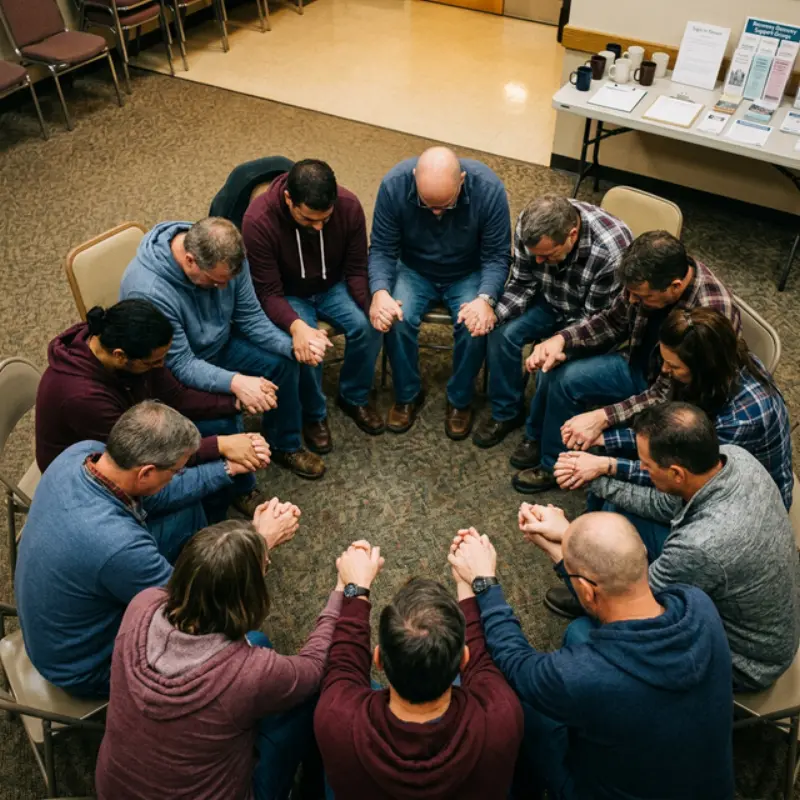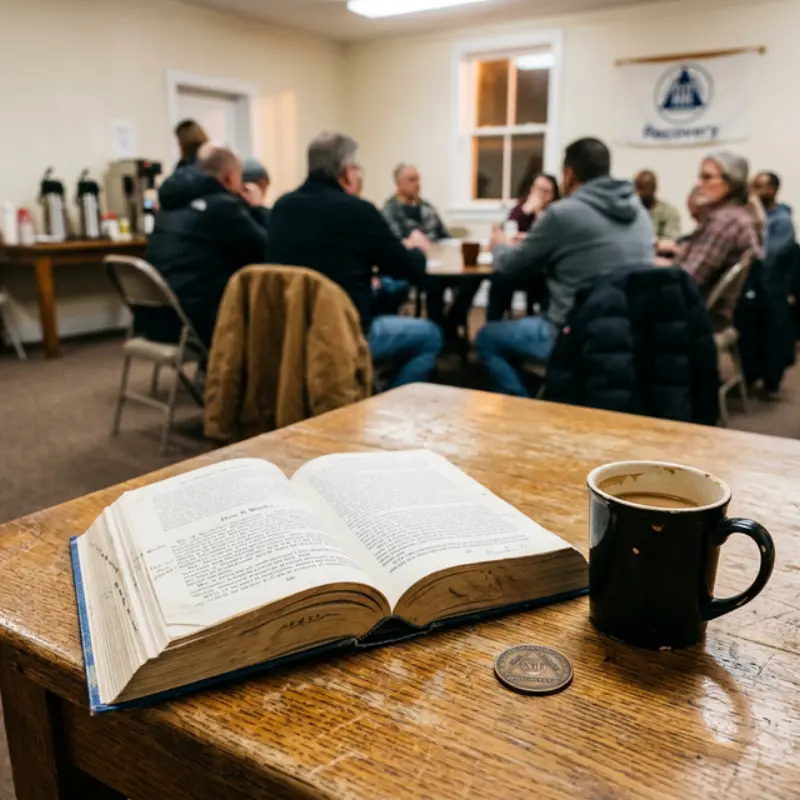
What Is the 12-Step Program?
The 12-step program is a set of guiding principles for recovery from addiction, originally developed by Alcoholics Anonymous (AA) co-founders Bill Wilson and Dr. Bob Smith in 1935. It is the world's most widely available and researched peer support model for addiction recovery, with over 100,000 groups worldwide across dozens of fellowships.
The 12 steps outline a process of admitting powerlessness over addiction, seeking help from a power greater than oneself, making moral inventory, making amends, and helping others — all within a supportive community of peers.
The 12 Steps Explained
- Step 1 — Admitted we were powerless over our addiction — that our lives had become unmanageable. Accepting the reality of the problem.
- Step 2 — Came to believe that a Power greater than ourselves could restore us to sanity. Opening to the possibility of help beyond yourself.
- Step 3 — Made a decision to turn our will and our lives over to the care of God as we understood Him. Surrendering control to something greater (interpreted personally).
- Step 4 — Made a searching and fearless moral inventory of ourselves. Honest self-examination of past behaviors and patterns.
- Step 5 — Admitted to God, to ourselves, and to another human being the exact nature of our wrongs. Sharing your inventory openly.
- Step 6 — Were entirely ready to have God remove all these defects of character. Becoming willing to change.
- Step 7 — Humbly asked Him to remove our shortcomings. Actively seeking personal transformation.
- Step 8 — Made a list of all persons we had harmed, and became willing to make amends to them all. Accountability for past harm.
- Step 9 — Made direct amends to such people wherever possible, except when to do so would injure them or others. Taking action to repair damage.
- Step 10 — Continued to take personal inventory and when we were wrong promptly admitted it. Ongoing self-reflection.
- Step 11 — Sought through prayer and meditation to improve our conscious contact with God as we understood Him. Continued spiritual practice.
- Step 12 — Having had a spiritual awakening as the result of these Steps, we tried to carry this message to others. Helping others in recovery.
How 12-Step Programs Work
- Regular meeting attendance — weekly or daily; creates routine and accountability
- Working the steps — progressing through each step with sponsor guidance
- Sponsor relationship — one-on-one mentorship from an experienced member
- Fellowship — social connections that replace using relationships
- Service — helping others (making coffee, greeting newcomers, sharing story, sponsoring)
- Literature — the "Big Book" (AA), "Basic Text" (NA) as foundational reading
The Role of Sponsors
A sponsor is a member with sustained recovery who guides you through the 12 steps:
- Available for phone calls when you're struggling
- Guides you through step work (especially Steps 4–9)
- Provides honest feedback and accountability
- Shares their own experience, strength, and hope
- Models a program of recovery in daily life
- Typically same-gender in AA tradition (to avoid romantic complications)
Types of Meetings
| Type | Description |
|---|---|
| Open Speaker | One person shares their story (20–45 min); open to everyone |
| Open Discussion | Facilitated sharing around a topic; open to everyone |
| Closed Discussion | For people who identify as addicts/alcoholics only |
| Step Study | Group reads and discusses one step at a time |
| Big Book Study | Reading and discussing AA's foundational text |
| Newcomer Meeting | Focused on new members; basics of the program |
| Online Meeting | Virtual meetings via Zoom or similar platforms |
Does the 12-Step Approach Work?
A 2020 Cochrane systematic review — the gold standard for evaluating medical evidence — analyzed 27 studies with 10,565 participants and found:
- AA/12-step facilitation was "more effective than other established treatments" for achieving and maintaining abstinence
- AA produced 10–20% higher abstinence rates compared to other treatments
- AA was at least as effective as CBT for reducing alcohol consumption
- Active participation (working steps, getting a sponsor, attending regularly) is the strongest predictor of success
- AA also reduced healthcare costs significantly
Common Concerns
- "It's religious" — it's spiritual, not religious; "Higher Power" is self-defined; atheists and agnostics welcome
- "I'm not that bad" — the only requirement is a desire to stop; no comparisons
- "I don't want to talk" — you never have to share; listening is participation
- "I'm on medication" — official stance supports MAT; medication is not "using"
- "It didn't work before" — try different meetings; engagement level matters most
Getting Started
- Find a meeting — aa.org or na.org
- Attend 6+ different meetings before making a judgment
- Introduce yourself as a newcomer (or just listen)
- Get phone numbers from people who resonate with you
- Find a sponsor — someone whose recovery you admire
- Start step work with your sponsor
- Keep coming back — consistency is key
Frequently Asked Questions
Is the 12-Step program religious?
The 12-step program is spiritual, not religious. The original steps reference "God," but this was adapted to "a Higher Power as we understood Him" to include people of all beliefs. Many members interpret their Higher Power as the group itself, the universe, nature, or simply a power greater than their addiction. Atheist and agnostic members are welcome and successful in 12-step programs. Secular alternatives exist for those who prefer a non-spiritual approach.
Do I need a sponsor?
While not technically required, having a sponsor is strongly recommended and is a core component of the program. A sponsor is someone with sustained recovery who guides you through the 12 steps, provides accountability, and offers support during difficult moments. Research shows that having a sponsor is associated with better recovery outcomes. You can ask someone at a meeting whose recovery you admire.
How effective is the 12-Step program?
A landmark 2020 Cochrane review (the gold standard for medical evidence) found that AA/12-step programs were "more effective than other established treatments" for achieving abstinence. The review analyzed 27 studies with 10,565 participants. Key findings: AA was at least as effective as CBT for reducing drinking, and more effective for achieving continuous abstinence. Regular meeting attendance is the strongest predictor of success.
What is the success rate of AA?
AA's internal surveys show approximately 22% of members have been sober for more than 20 years, 14% for 10-20 years, and 24% for 5-10 years. The Cochrane review found that AA participation produces 10-20% higher abstinence rates compared to other treatments. However, measuring "success rate" is complex because AA is anonymous and self-selecting. What research clearly shows is that active, engaged participation in 12-step programs significantly improves outcomes.
Can I attend 12-step meetings while on medication (MAT)?
Yes. AA, NA, and other 12-step fellowships officially support the use of medication prescribed by a physician. AA's General Service Conference has affirmed that taking properly prescribed medication is not the same as "using." Some individual meetings may have members with outdated views, but the organizational stance is clear. If you encounter judgment, try a different meeting — most groups are welcoming of MAT.
What is the difference between open and closed meetings?
Open meetings welcome anyone — family members, students, researchers, or anyone curious about the program. Closed meetings are limited to people who identify as having a desire to stop drinking/using. Both types follow similar formats. If you are attending for your own addiction, you can attend either type. If you are attending for educational or supportive purposes, attend open meetings.
Do I have to do all 12 steps?
The steps are suggestions, not requirements. The only requirement for membership is a desire to stop using. However, evidence shows that the most benefit comes from complete step work. Many members work through the steps multiple times throughout their recovery. The steps are designed to be done in order with sponsor guidance. Even partial engagement (attending meetings, building relationships) provides benefit.
How is NA different from AA?
AA focuses specifically on alcohol, while NA addresses addiction to any substance. NA adapted AA's 12 steps for broader application. In practice, many people with drug addictions attend both AA and NA meetings. AA tends to have more available meetings and a longer history (founded 1935 vs. NA's 1953). Both follow the same fundamental program structure and principles.
Sources & References
- Kelly JF, et al. Alcoholics Anonymous and other 12-step programs for alcohol use disorder. Cochrane Database Syst Rev. 2020;3:CD012880.
- AA General Service Office. Alcoholics Anonymous 2014 Membership Survey.
- Alcoholics Anonymous. Alcoholics Anonymous: The Story of How Many Thousands of Men and Women Have Recovered from Alcoholism. ("Big Book") 4th ed. 2001.
- Narcotics Anonymous. Basic Text. 6th ed. World Service Office.