
Aerobic Exercise for Cardiovascular Disease Prevention
Aerobic Exercise for Cardiovascular Disease Prevention
You already know exercise matters, but the real question is simpler and harder at the same time. Are you getting enough of the right kind to protect your heart? That is where aerobic exercise for cardiovascular disease prevention deserves a close look. Heart disease remains the leading cause of death in the United States, according to the CDC, and a routine that falls short can leave a big gap in your health plan. Walking the dog once in a while is good. It may not be enough. Recent reporting from Healthline, based on expert guidance and current research, points to a familiar truth that many people still miss. Your heart needs regular, sustained movement. And if your week is packed, your fitness plan has to be practical, not perfect.
What matters most
- Aerobic exercise for cardiovascular disease prevention works best when you do it consistently each week.
- Current public health guidance often points to 150 minutes of moderate activity or 75 minutes of vigorous activity weekly.
- Walking briskly, cycling, swimming, and similar activities help improve blood pressure, cholesterol, and heart function.
- Small changes count, but intensity and duration still matter if your goal is lower cardiovascular risk.
Why aerobic exercise for cardiovascular disease prevention matters
Aerobic exercise raises your heart rate and keeps it up long enough to train your cardiovascular system. Over time, that can help lower blood pressure, improve insulin sensitivity, support weight management, and raise cardiorespiratory fitness. Those are not minor shifts. They are core markers tied to heart attack and stroke risk.
Look, this is one of the least flashy tools in medicine. It is also one of the most reliable. The American Heart Association and the Physical Activity Guidelines for Americans have said for years that regular aerobic activity is linked to lower cardiovascular disease risk, and that finding keeps showing up in large population studies.
Think of your heart like a house’s plumbing system. If water moves through the pipes regularly and under healthy pressure, the system tends to hold up better. If the flow is poor and the pressure stays off, problems build quietly.
How much aerobic exercise do you actually need?
For most adults, the common benchmark is at least 150 minutes a week of moderate-intensity aerobic activity, or 75 minutes a week of vigorous activity. You can also mix the two. That guidance comes from federal physical activity recommendations and is widely used by clinicians.
Moderate intensity means you can talk but not sing during the activity. Vigorous intensity means talking in full sentences gets tough. A brisk walk, steady cycling, water aerobics, or mowing the lawn may fit the first group. Running, fast cycling, swimming laps, or uphill hiking often fit the second.
That baseline is a floor, not a finish line.
Some research suggests extra benefits can build when weekly activity goes beyond the minimum, especially for cardiovascular fitness. But if you are inactive now, chasing an ideal number can backfire. Starting with 10 to 15 minutes a day is far better than doing nothing because the target feels too high.
Best types of aerobic exercise for cardiovascular disease prevention
You do not need an expensive program. You need something you will keep doing next month.
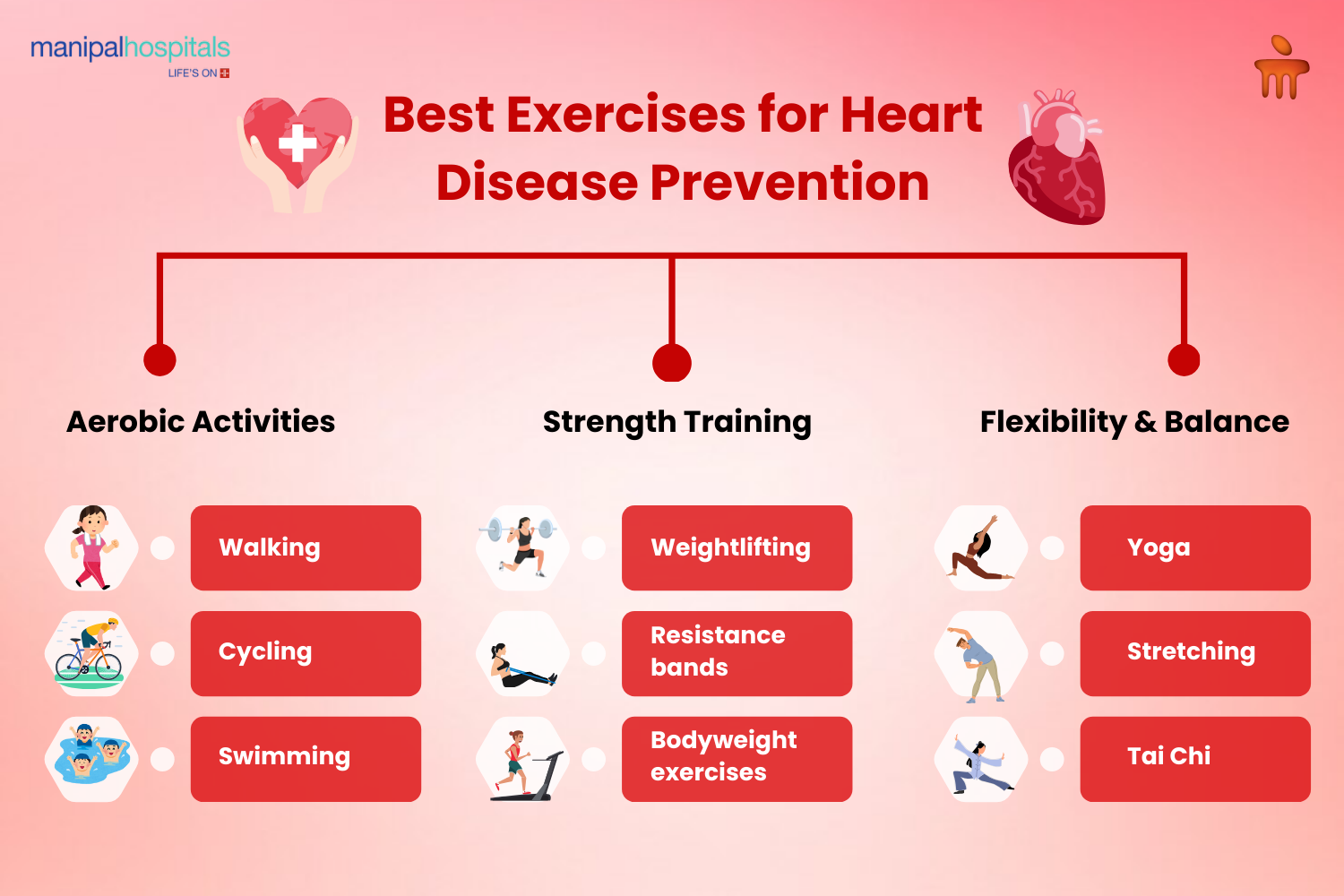
- Brisk walking
Easy to start, low cost, and backed by strong evidence. If you can pick up the pace enough to breathe harder, it counts. - Cycling
Good for people who want lower joint impact. Outdoor rides and stationary bikes both work. - Swimming
A solid choice if you have joint pain or want a full-body workout. - Dancing or aerobic classes
These can make consistency easier because rhythm and group energy keep boredom down. - Jogging
Efficient for people who can tolerate higher impact and want to reach vigorous intensity faster.
Honestly, the best option is the one that survives your schedule, your knees, and your attention span.
What if you only have short windows of time?
That is normal. And yes, shorter sessions still help. You can split exercise into smaller chunks across the day, as long as the total volume adds up and the effort is real. Three 10-minute brisk walks can be more useful than one vague plan that never happens.
Try this simple weekly structure:
- 30 minutes of brisk walking, 5 days a week
- 20 to 25 minutes of vigorous cycling, 3 days a week
- 10-minute walks after meals, 2 or 3 times a day
But here is the catch. Casual movement and true aerobic training are not always the same thing. If your effort never gets beyond a slow stroll, your heart may not get enough stimulus to adapt.
Aerobic exercise for cardiovascular disease prevention if you are starting from zero
Begin below your ego. That is usually the smart move.
If you have been inactive, build with a stepwise approach:
- Start with 10 minutes of brisk walking most days.
- Add 5 minutes every week or two.
- Use the talk test to judge effort.
- Include one slightly harder day when the easier days feel manageable.
- Track your minutes so you know what is real, not what felt busy.
This is where many people slip. They overdo week one, get sore or annoyed, then stop. A better model is cooking over low heat instead of blasting the pan. Slow, steady progress tends to last.
What the evidence says about heart health benefits
Healthline’s report highlights a broader point that heart specialists have been making for years. Many adults are still not reaching enough aerobic activity for meaningful cardiovascular protection. That matters because low fitness is strongly tied to worse long-term outcomes.
Named public health sources support the case. The CDC states that physical activity can reduce your risk of heart disease, stroke, type 2 diabetes, and some cancers. The American Heart Association also notes that regular aerobic activity can improve circulation, lower blood pressure, and help control body weight. Those effects interact with each other, which is one reason exercise punches above its weight.
And ask yourself this. If a medication lowered several cardiovascular risk factors at once, would doctors ignore it?
Common mistakes that weaken your results
Going too easy every time
Comfortable movement is good, but your body needs enough challenge to adapt. Mix in sessions that feel moderately hard once you build a base.
Relying on weekends only
A huge Saturday workout can feel productive, yet regular weekly activity is usually a better bet for consistency and recovery.
Ignoring strength training
This article focuses on aerobic exercise, but muscle-strengthening work still matters. It supports metabolic health, function, and long-term mobility (especially as you age).
Assuming chores are enough
Some household activity counts. Some does not. Track your heart rate, pace, or effort if you want a clearer picture.
How to make the habit stick
Veteran health reporters see the same pattern over and over. People fail less from lack of information than from bad fit. Your plan should match your life.
- Schedule exercise at the same time each day.
- Choose one default activity you can do without much setup.
- Lay out shoes or gear in advance.
- Use a phone reminder or calendar block.
- Pair walks with calls, podcasts, or a family routine.
If you want a practical next step, aim for one week you can repeat. Not an aspirational week. A real one. That is usually where aerobic exercise for cardiovascular disease prevention stops being advice and starts becoming protection.
Sources
This article was medically reviewed and draws from peer-reviewed research and clinical guidelines published by:
- National Institute on Drug Abuse (NIDA)
- Substance Abuse and Mental Health Services Administration (SAMHSA)
- Centers for Disease Control and Prevention (CDC)
- MedlinePlus — U.S. National Library of Medicine
Content is reviewed for medical accuracy by our editorial team. Last reviewed: May 23, 2026.
Medical Disclaimer: This article is for educational purposes only. It is not a substitute for professional medical advice, diagnosis, or treatment. Always consult a qualified healthcare provider before making changes to your treatment plan. If you are experiencing a medical emergency, call 911 immediately. For substance use support, call SAMHSA at 1-800-662-4357 (free, confidential, 24/7).