
Recognizing Overdose Signs: What You Need to Know
Why Recognizing Overdose Signs Matters
Drug overdose is the leading cause of accidental death in the United States, killing over 107,000 Americans in 2023 alone. Recognizing the signs of an overdose and responding quickly saves lives. The difference between survival and death in a drug overdose often comes down to minutes.
Knowing what to look for, how to respond, and when to use naloxone gives you the power to intervene in these critical moments. You do not need medical training to save someone's life during an overdose.
Critical Facts About Drug Overdose
- Opioid overdoses account for approximately 75% of all drug overdose deaths in the U.S.
- Fentanyl is now present in most illicit opioid supplies and is the primary driver of overdose deaths
- Every state has a Good Samaritan law that protects people who call 911 during an overdose from prosecution
- Naloxone (Narcan) can reverse an opioid overdose and is available at many pharmacies without a prescription
"Most opioid overdose deaths are preventable with timely administration of naloxone and activation of emergency medical services. Bystanders are often the first responders in overdose situations." - Centers for Disease Control and Prevention
Opioid Overdose Signs
Opioids (heroin, fentanyl, oxycodone, morphine, methadone) are the most common cause of fatal overdoses. An opioid overdose depresses the central nervous system, slowing breathing to dangerous or fatal levels.
Key Signs of Opioid Overdose
- Slow, shallow, or stopped breathing: this is the most critical sign. Fewer than 12 breaths per minute indicates a medical emergency.
- Blue or purple lips, fingertips, or face (cyanosis): indicates oxygen deprivation
- Pinpoint pupils (miosis): pupils constricted to tiny dots even in low light
- Unresponsiveness: the person cannot be woken by voice, touch, or a sternal rub (knuckles pressed firmly on the breastbone)
- Gurgling, snoring, or choking sounds: sometimes called the "death rattle," indicates airway obstruction
- Limp body and pale, clammy skin
- Slow or absent pulse
Stimulant Overdose Signs
Stimulants (cocaine, methamphetamine, MDMA, Adderall) overstimulate the cardiovascular and central nervous systems. Stimulant overdoses can cause fatal heart attacks, strokes, and seizures.
Key Signs of Stimulant Overdose
- Chest pain or pressure: may indicate a heart attack
- Extremely rapid or irregular heartbeat
- Severe headache: may indicate a stroke or brain hemorrhage
- Seizures: uncontrolled muscle contractions and jerking
- Hyperthermia: dangerously elevated body temperature (above 104 F)
- Extreme agitation, paranoia, or psychosis
- Difficulty breathing
- Loss of consciousness
Depressant Overdose Signs
Depressants (alcohol, benzodiazepines, barbiturates, GHB) slow the central nervous system. Overdose signs overlap with opioid overdoses:
- Extremely slurred speech or inability to speak
- Severe confusion or disorientation
- Vomiting (risk of choking while unconscious)
- Slow or irregular breathing
- Bluish skin color
- Loss of consciousness or inability to be roused
- Seizures (especially during alcohol or benzodiazepine overdose)
How to Respond to an Overdose
Step 1: Call 911 Immediately
Call emergency services before doing anything else. Time is critical. When calling:
- State that someone is unresponsive and not breathing normally
- Provide your exact location
- Stay on the line and follow dispatcher instructions
- Do not hang up
Step 2: Administer Naloxone (If Available and Opioid Overdose Is Suspected)
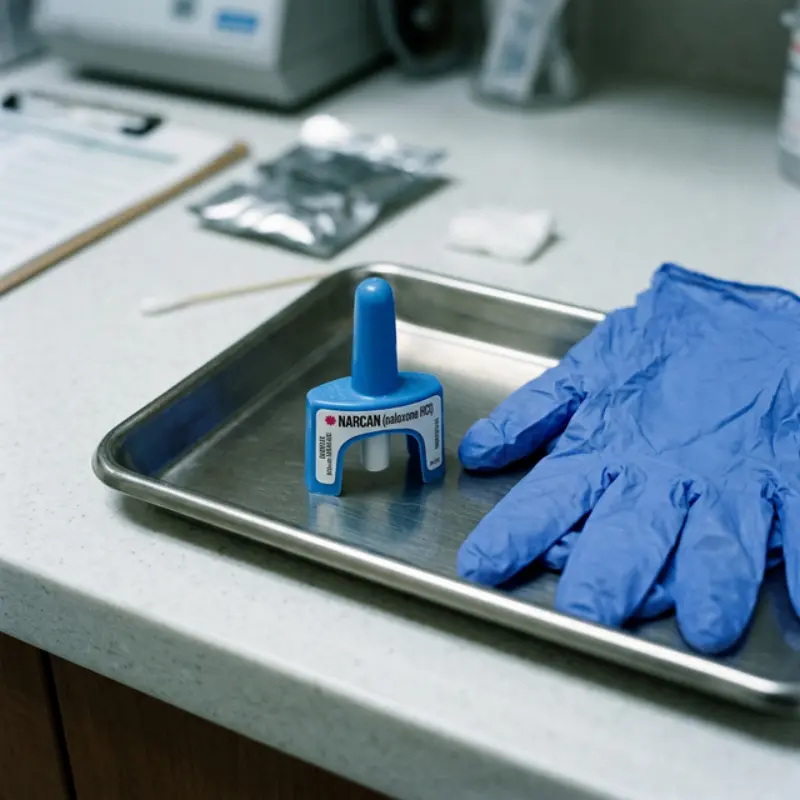
Naloxone (Narcan) reverses opioid overdoses by blocking opioid receptors in the brain and restoring breathing. Naloxone is safe: it has no effect if opioids are not present in the person's system.
- Nasal spray (Narcan): place the nozzle in one nostril and press the plunger firmly
- If no response in 2 to 3 minutes: administer a second dose in the other nostril
- Continue monitoring: naloxone wears off in 30 to 90 minutes. The person may stop breathing again if the opioid outlasts the naloxone.
Step 3: Perform Rescue Breathing
If the person is not breathing or breathing very slowly:
- Tilt their head back and lift their chin to open the airway
- Pinch their nose shut
- Give one rescue breath every 5 seconds
- Continue until the person starts breathing on their own or emergency services arrive
Step 4: Place in Recovery Position
If the person is breathing but unconscious:
- Roll them onto their side
- Bend their top knee forward for stability
- Tilt their head back slightly to keep the airway open
- This position prevents choking on vomit
Step 5: Stay Until Help Arrives
Remain with the person until emergency medical services arrive. Monitor their breathing and be prepared to administer additional naloxone or rescue breaths if needed.
Good Samaritan Laws
Every state has some form of Good Samaritan law designed to encourage people to call 911 during an overdose. These laws typically provide protection from prosecution for drug possession or paraphernalia charges for the person who calls 911 and the overdose victim. Fear of legal consequences should never prevent you from calling for help.
How to Get Naloxone
- Pharmacies: naloxone is available without a prescription in all 50 states. Ask your pharmacist for Narcan nasal spray.
- Community organizations: many harm reduction organizations distribute free naloxone kits
- Doctor's office: your doctor can prescribe naloxone if you or someone you know uses opioids
- Online: NEXT Distro (nextdistro.org) ships free naloxone to most U.S. addresses
Reducing Overdose Risk
- Never use alone: always have someone present who can call 911 and administer naloxone
- Start low: if you have been abstinent (after detox, jail, treatment), your tolerance has decreased. Using the same amount you previously tolerated is the leading cause of fatal overdose after a period of abstinence.
- Avoid mixing substances: combining opioids with benzodiazepines, alcohol, or other depressants multiplies overdose risk
- Carry naloxone: if you or someone you know uses opioids, keep naloxone accessible at all times
- Use fentanyl test strips: test illicit drugs for fentanyl before use. Fentanyl is now present in heroin, cocaine, counterfeit pills, and methamphetamine.
Emergency Resources
If someone is overdosing, call 911 immediately. Every second matters.
For addiction treatment referrals, call SAMHSA's National Helpline at 1-800-662-4357 (free, confidential, 24/7). If you are in crisis, call the 988 Suicide and Crisis Lifeline.
Sources
This article was medically reviewed and draws from peer-reviewed research and clinical guidelines published by:
- National Institute on Drug Abuse (NIDA)
- Substance Abuse and Mental Health Services Administration (SAMHSA)
- Centers for Disease Control and Prevention (CDC)
- MedlinePlus — U.S. National Library of Medicine
Content is reviewed for medical accuracy by our editorial team. Last reviewed: December 10, 2025.
Medical Disclaimer: This article is for educational purposes only. It is not a substitute for professional medical advice, diagnosis, or treatment. Always consult a qualified healthcare provider before making changes to your treatment plan. If you are experiencing a medical emergency, call 911 immediately. For substance use support, call SAMHSA at 1-800-662-4357 (free, confidential, 24/7).
Related Articles
Understanding Fentanyl: Dangers, Effects, and Recovery Options
Fentanyl is one of the most potent synthetic opioids. Learn about its dangers, side effects, and the path to recovery.
Glassy Eyes: What They Mean and When to Worry
Glassy eyes can be a sign of substance use or other medical conditions. Learn what causes them and when to seek help.
Dilated Pupils: Causes and What They Indicate
Dilated pupils can be a telltale sign of drug use. Learn which substances cause this symptom and what to look for.