
Death Doula Training After Nicole Kidman’s Spotlight
Death Doula Training After Nicole Kidman’s Spotlight
You may have seen fresh interest in death doula training after Nicole Kidman spoke about preparing for a role tied to end-of-life care. That attention makes sense. More families are asking how to make dying less chaotic, less clinical, and more human. At the same time, plenty of people still do not know what a death doula actually does, or whether formal training means much in a field without one universal license.
That gap matters now because aging populations, caregiver strain, and rising demand for hospice support are all pushing end-of-life planning into public view. If you are curious about the work, or wondering whether training is worth your time and money, you need a clear read on the field. Hype is easy. Useful facts are better.
What stands out
- Death doulas support people and families with nonmedical end-of-life care, planning, and presence.
- Death doula training programs vary a lot in depth, cost, and credibility because no single national standard governs the field.
- Training often covers communication, grief, advance care planning, bedside support, and cultural or spiritual issues.
- Most death doulas do not replace hospice nurses, social workers, or therapists. They fill gaps around emotional and practical support.
What is death doula training, really?
Death doula training teaches people how to support someone before, during, and sometimes after death. The role is usually nonclinical. That means no giving medication, no diagnosing, and no replacing licensed care teams.
Look at it like a stage manager in theater. Doctors and nurses handle the medicine. A death doula often helps with the flow around the event, the conversations, the environment, and the people who are struggling to keep up.
Programs can include bedside presence, legacy work, vigil planning, family communication, and help with practical choices such as advance directives or funeral wishes. Some also cover business basics for people who want to work privately.
Death doulas are often described as companions and guides for the dying person and their family, not medical providers.
Why death doula training is getting attention
Celebrity attention can distort a topic fast. But it can also pull a hidden job into the open. That seems to be what happened here.
Healthline’s reporting on Nicole Kidman’s training brought more eyes to a role that has been growing for years. And that growth tracks with a larger shift in health care. Families want more say, more calm, and more support at the end of life. Who doesn’t?
This is where public interest and hard reality meet.
Hospice teams do vital work, but they are often stretched thin. A death doula may spend extra time talking through fears, helping organize rituals, or simply sitting with someone so they are not alone. That can matter a lot, even if it does not show up on a billing code.
What good death doula training should cover
If you are comparing programs, start with the curriculum. Some courses are solid. Others are thin, vague, and priced like luxury workshops.
A worthwhile death doula training program should usually include:
- Role boundaries
You need clear limits between doula support and clinical care. This is non-negotiable. - Communication skills
That includes active listening, family conflict, difficult conversations, and how to respond without taking over. - End-of-life planning
Expect content on advance directives, care wishes, vigil planning, and funeral or memorial discussions. - Grief and bereavement basics
Not to turn you into a therapist, but to help you recognize grief responses and refer out when needed. - Cultural and spiritual humility
A decent program should stress respect for different traditions and values. - Ethics and consent
Privacy, family dynamics, and decision-making can get messy fast. - Hands-on practice
Role-play, case studies, or supervised experience beats a course that stays fully abstract.
And yes, ask who teaches it. A course led by people with hospice, palliative care, grief work, or long field experience usually carries more weight than one built around branding.
What death doulas do, and what they do not do
What they often do
- Help a person talk through fears and wishes
- Support legacy projects such as letters, recordings, or memory boxes
- Assist with end-of-life planning conversations
- Provide bedside companionship
- Help families understand what to expect emotionally and practically
- Create a calmer setting during the dying process
What they should not do
- Give medical advice
- Administer medication
- Override hospice or palliative care teams
- Provide therapy unless separately licensed
- Promise a “good death” as if that can be packaged
Here’s the thing. The role can be valuable, but only if the boundaries stay sharp.
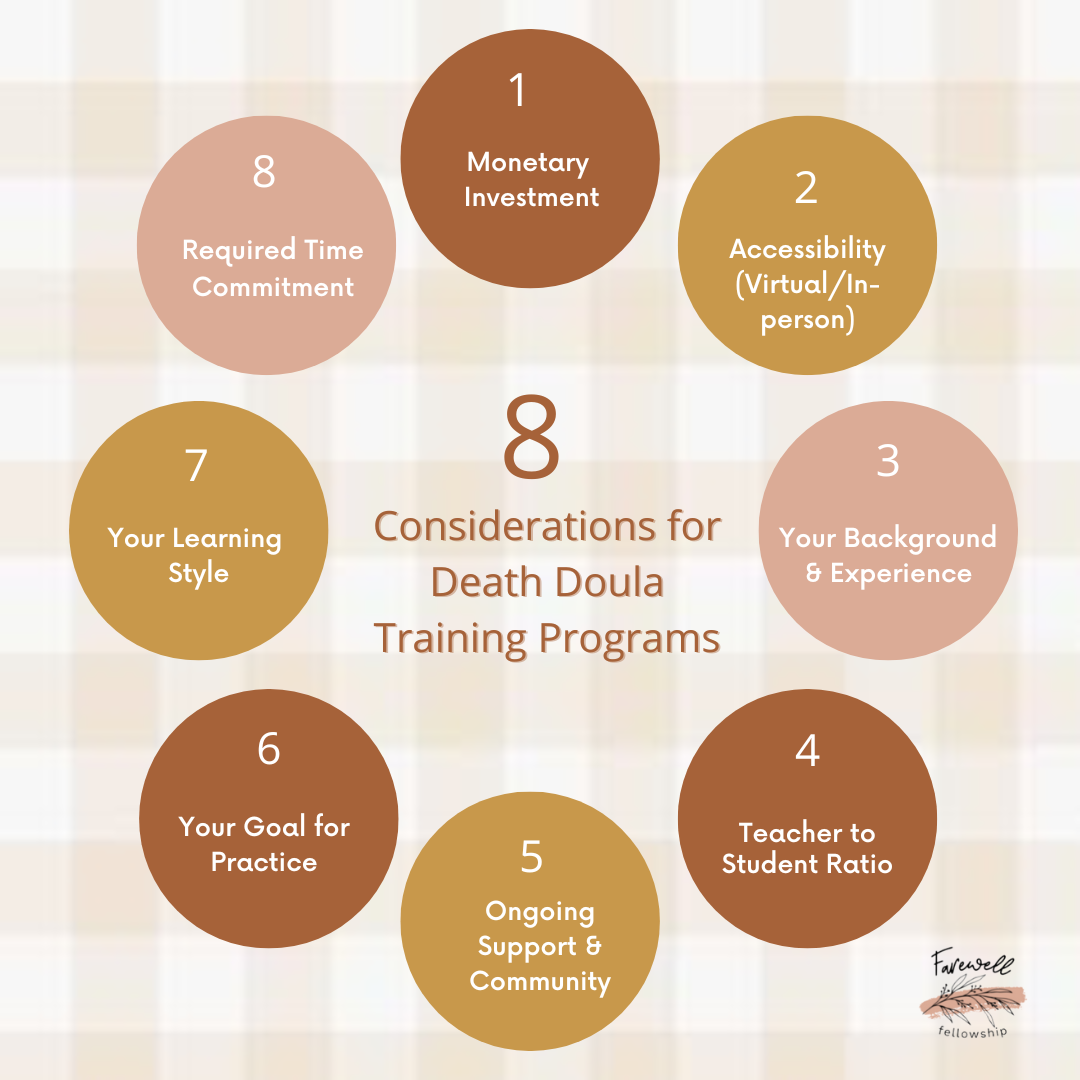
How to judge a death doula training program
The field is still uneven. That means you need to vet programs with a cold eye.
Ask these questions before you pay:
- Who created the course, and what is their real-world experience?
- How many hours of instruction are included?
- Is there supervised practice, mentoring, or peer review?
- Does the program explain local legal limits and scope of practice?
- Are hospice, palliative care, and grief professionals involved?
- What do graduates actually go on to do?
- What support exists after the course ends?
Be careful with programs that sell certainty. End-of-life care is human, messy, and emotionally loaded. Any training that markets easy mastery is selling you fantasy.
Is death doula training worth it?
That depends on your goal. If you want to support a loved one, a shorter course may help you feel more prepared and less afraid. If you want to build a practice, you need more than a certificate. You need supervision, emotional stamina, referral networks, and a blunt understanding of what families will and will not pay for.
Some people enter this work because they had a powerful personal loss. That can be a strong starting point, but it is not enough on its own. Training can help turn raw experience into useful support for others (without making someone else’s dying process about your story).
How this fits into the wider care system
Death doulas sit beside hospice and palliative care, not above them. Hospice focuses on comfort care for people nearing the end of life. Palliative care can start earlier and works alongside treatment to ease symptoms and stress.
A skilled doula may complement both. They might spend more time on emotional presence, rituals, family preparation, and practical conversation. That support can reduce confusion and panic, especially when relatives are overwhelmed.
Still, the cleanest version of this role is collaborative. If a doula treats licensed clinicians as the problem, that is a bad sign.
What to do next if you are interested in death doula training
Start small before you commit to a full program.
- Read about hospice and palliative care first
- Talk with local hospice workers about gaps families face
- Compare several death doula training programs side by side
- Look for courses with ethics, scope, and supervised practice
- Check whether your state or region has relevant laws or guidance
- Reflect honestly on your own grief, triggers, and limits
Honestly, this work asks for steadiness more than performance. Public attention will come and go. The real test is whether you can show up, stay grounded, and help families through one of the hardest days they will ever face.
Where this field may go next
Expect more people to hear about death doulas, and more programs to chase that demand. Some will raise standards. Some will cash in.
If interest keeps growing, the pressure for clearer training norms and stronger ties to hospice and palliative care will grow too. That would be good for families, good for doulas, and good for a field that still needs sharper lines. The question is simple: will death doula training mature into a trusted support role, or get buried under trend-driven noise?
Sources
This article was medically reviewed and draws from peer-reviewed research and clinical guidelines published by:
- National Institute on Drug Abuse (NIDA)
- Substance Abuse and Mental Health Services Administration (SAMHSA)
- Centers for Disease Control and Prevention (CDC)
- MedlinePlus — U.S. National Library of Medicine
Content is reviewed for medical accuracy by our editorial team. Last reviewed: May 1, 2026.
Medical Disclaimer: This article is for educational purposes only. It is not a substitute for professional medical advice, diagnosis, or treatment. Always consult a qualified healthcare provider before making changes to your treatment plan. If you are experiencing a medical emergency, call 911 immediately. For substance use support, call SAMHSA at 1-800-662-4357 (free, confidential, 24/7).