
Depo-Provera and Brain Tumor Risk: What the New Data Means
Depo-Provera and Brain Tumor Risk: What the New Data Means
If you use Depo-Provera or another hormonal contraceptive, this latest news can feel unsettling. The question is simple, and it matters now: does your birth control raise the risk of a noncancerous brain tumor, and if so, by how much? That is the core issue behind the new Depo-Provera brain tumor risk discussion. The answer is not panic. It is context. A recent Healthline report on emerging research points to a possible link between some hormonal contraceptives and meningiomas, which are usually benign but can still cause serious problems depending on size and location. You need the facts before you make any changes, because stopping a contraceptive without a plan can create a different set of risks. What should you actually do with this information?
What the Depo-Provera brain tumor risk reports are saying
Researchers have been looking at meningiomas, a type of noncancerous brain tumor that grows from the membranes around the brain and spinal cord. Some studies have found an association between certain progestin-based contraceptives and a higher chance of these tumors, especially with longer use. That does not mean every user faces the same risk. It means the signal is strong enough to deserve attention.
Depo-Provera is a progestin-only injection. Other hormonal contraceptives have also been studied, including pills, implants, and hormonal IUDs. The research is still evolving, but the concern is no longer fringe. It is in the conversation now.
Take the signal seriously, but keep the scale in view. An association is not the same thing as proof that the drug causes the tumor in every case.
Why meningiomas matter even though they are noncancerous
Meningiomas are usually slow-growing and often treatable. But “noncancerous” does not mean harmless. A tumor in the wrong spot can affect vision, balance, memory, or seizures, depending on where it presses in the brain.
Think of it like a small wall crack in a house. It may look minor at first, but if it sits near a load-bearing beam, you do not ignore it. The location and size matter more than the label.
Symptoms can include headaches, vision changes, weakness, hearing problems, or seizures. Many people have no symptoms at all until the tumor is found on imaging. That is why this issue can stay hidden for years.
Who should pay the closest attention to Depo-Provera brain tumor risk
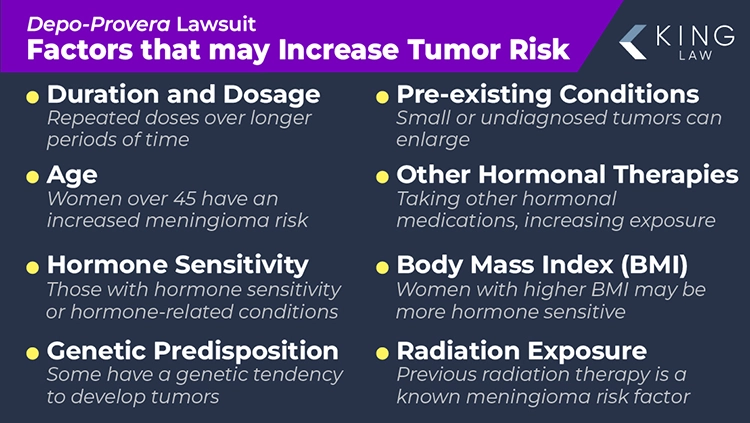
Not everyone using hormonal contraception needs to assume the worst. But some people should talk to a clinician sooner rather than later.
- People who have used Depo-Provera for a long time, especially over many years.
- People with new neurologic symptoms such as persistent headaches, vision changes, or seizures.
- People with a history of meningioma or prior brain imaging that showed a tumor.
- People weighing long-term contraceptive options and trying to compare methods.
One important point: the absolute risk for any one person may still be low. But if your exposure is long and your symptoms are new, that changes the conversation.
How strong is the evidence on Depo-Provera brain tumor risk?
The strongest studies in this area are observational. That means researchers can spot patterns, but they cannot prove cause and effect the way a randomized trial might. Still, large population studies can be useful when the same signal shows up again and again.
French research published in recent years has found an increased risk of meningioma with prolonged use of certain hormonal contraceptives, especially some injectable progestins. Other studies have pointed in a similar direction. Health agencies and clinicians are watching this closely because the pattern is specific enough to matter.
Here is the real-world issue: if a medicine is used by millions of people, even a small risk can affect a lot of patients. That is why this topic has moved from academic journals into everyday care.
What you should ask your doctor about Depo-Provera brain tumor risk
Do not stop or switch on your own if you rely on birth control for pregnancy prevention or symptom control. Start with a direct conversation. Bring your timeline, your symptoms, and the exact product name if you know it.
- How long have I used Depo-Provera or another hormonal method?
- Do my symptoms fit a meningioma or something else?
- Should I consider imaging based on my history?
- What are my non-hormonal options if I want to change methods?
- How does my personal risk compare with the benefit I get from this contraceptive?
That last question is the one that counts. Birth control decisions are about tradeoffs, not slogans.
And yes, a method that works well for one person may be a poor fit for another. Medicine should be tailored, not copied from a brochure.
What to watch for next
Researchers will keep refining the data on progestin exposure, duration of use, and tumor risk. Expect more guidance from clinicians as the evidence base grows. That is how this usually works. The picture starts blurry, then sharper patterns emerge.
If you are using Depo-Provera now, stay calm and stay curious. Ask the question your chart cannot answer on its own: is this still the best contraceptive for me, given my history and my goals? That is the next move worth making.
What to do now about Depo-Provera brain tumor risk
If you want a practical next step, start with your prescribing clinician or a gynecologist. Bring up your symptoms, how long you have used hormonal contraception, and whether you have ever had brain imaging. If you are symptom-free and using Depo-Provera for a good reason, you may decide the benefits still outweigh the risk. But if you have headaches that changed, vision problems, or a prior meningioma, this is not the time to shrug it off. Which matters more for you right now, staying with a familiar method or checking whether a safer fit is available?
Sources
This article was medically reviewed and draws from peer-reviewed research and clinical guidelines published by:
- National Institute on Drug Abuse (NIDA)
- Substance Abuse and Mental Health Services Administration (SAMHSA)
- Centers for Disease Control and Prevention (CDC)
- MedlinePlus — U.S. National Library of Medicine
Content is reviewed for medical accuracy by our editorial team. Last reviewed: July 16, 2026.
Medical Disclaimer: This article is for educational purposes only. It is not a substitute for professional medical advice, diagnosis, or treatment. Always consult a qualified healthcare provider before making changes to your treatment plan. If you are experiencing a medical emergency, call 911 immediately. For substance use support, call SAMHSA at 1-800-662-4357 (free, confidential, 24/7).