
Generic Mounjaro and Zepbound: What the FDA Review Means
Generic Mounjaro and Zepbound: What the FDA Review Means
If you have been watching the price of GLP-1 drugs climb, the news about generic Mounjaro and Zepbound matters right now. These medicines, both tied to tirzepatide, sit at the center of a fast-moving market where demand is high and supply, coverage, and out-of-pocket costs can change quickly. For many people, the question is not whether these drugs work. The question is whether you can actually afford them, find them, and stay on them long enough to see results.
That is why the FDA review of generic applications is more than a paperwork story. It could shape access for people treating type 2 diabetes and obesity, and it could pressure brand-name pricing in a market already under strain. But what does a review really mean, and how close are we to lower-cost options? Let’s break it down without the hype.
- Generic Mounjaro and Zepbound are tied to tirzepatide, the active ingredient in both brands.
- FDA review is not the same as approval. A review can still lead to questions, delays, or rejection.
- Lower-cost competition could ease access, but timing is uncertain.
- Brand-name drugs may still dominate if supply, patents, or manufacturing issues slow the market.
- You should watch official FDA actions, not social media rumors, before making treatment changes.
What is the FDA reviewing in generic Mounjaro and Zepbound?
The FDA reviews applications from companies that want to make a version of an approved drug once legal and technical barriers are cleared. For tirzepatide products, that means companies are asking to enter a market currently led by Eli Lilly’s Mounjaro and Zepbound. If the agency finds the data strong enough, a generic or biosimilar-style competitor could eventually reach patients at a lower price.
But review is only one step. The FDA still checks manufacturing quality, labeling, stability, and whether the proposed product matches the reference drug closely enough. A company can have a serious application and still not make it across the finish line.
FDA review does not mean immediate access. It means the agency is looking at whether the application meets the standard for approval.
Why generic Mounjaro and Zepbound matter for your costs
Drug pricing in the U.S. is brutal. People with insurance can still face steep copays, prior authorization, or coverage limits. People paying cash often see prices that feel out of reach. If lower-cost versions of tirzepatide enter the market, that could change the economics in a real way.
Think of it like a crowded restaurant with one checkout lane. The line moves slowly, the bill is high, and everybody feels stuck. Add more lanes, and the system gets less painful. Not perfect, just less punishing.
That said, competition does not always slash prices overnight. Patent disputes, supply chain limits, and pharmacy contracting can slow the effect. And even when generics arrive, some people still pay more than they expect because insurance plans do their own math.
Could approval change access for diabetes and weight loss treatment?
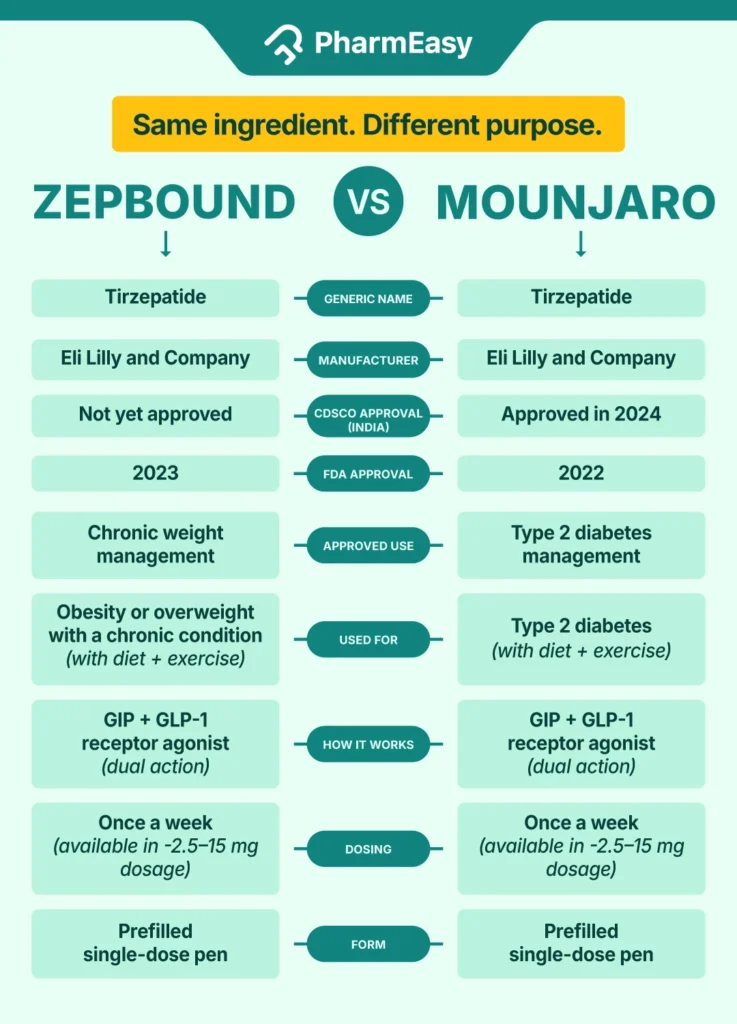
Yes, but not evenly. Mounjaro is approved for type 2 diabetes. Zepbound is approved for chronic weight management. Both use tirzepatide, but access rules differ by diagnosis, insurer, and pharmacy benefit manager. That means a lower-cost version could help one group faster than another.
For patients, the practical impact would likely show up in three places:
- Less cash pain if a pharmacy discount or generic price beats the brand price.
- Better insurance coverage if payers use the cheaper option to widen access.
- More consistent supply if competition expands manufacturing capacity.
But here is the catch. Lower price alone does not guarantee easier access. If insurers keep prior authorization rules tight, many people will still get bounced around. Have you ever tried to get a new GLP-1 covered after a formulary change? It can feel like a maze built by people who have never waited at a pharmacy counter.
What should you watch next in the mainKeyword story?
The next signals matter more than headlines. Watch for FDA decision updates, company announcements, and any patent or exclusivity changes. Also watch whether the application covers the exact formulation, delivery device, and dosage range that patients actually use. Those details can shape real-world availability.
One approval does not fix the market. It only opens the door. After that, manufacturing scale, insurer behavior, and pharmacy inventory decide how much people notice the change.
What to ask your prescriber or pharmacist
If you are using tirzepatide now, ask direct questions:
- Is my current prescription likely to stay covered if pricing changes?
- Would a lower-cost version be treated the same by my insurer?
- Are there formulary alternatives if my pharmacy runs short?
- Should I expect any change in dose availability or refill timing?
Those questions matter because the drug market rarely moves in a straight line. One approval can trigger a new bottleneck somewhere else.
Why this market is different from a simple generic swap
With many older drugs, generic entry is routine. A pill goes off patent, multiple manufacturers jump in, and prices fall. Tirzepatide is more complicated. It is an injectable medicine with strict manufacturing demands, and the brand company may still have intellectual property defenses in play. That makes the path slower and messier than a typical generic rollout.
It also means media coverage can be misleading. A filing is not a launch. A review is not an approval. And an approval is not the same as broad pharmacy access. The chain has too many weak links for anyone to promise a clean timeline.
What this means if you use tirzepatide now
If you take Mounjaro or Zepbound, do not change your treatment based on rumors of an upcoming generic. Wait for official FDA action and your prescriber’s advice. Keep track of your refill dates, insurance coverage, and any prior authorization deadlines, because those are the points where people get burned.
And if you are priced out today, ask about alternatives, manufacturer support, and whether your plan covers a different GLP-1 or weight-loss option. Access is the real issue here. Not brand loyalty.
The next move belongs to the FDA, but the real test will be whether patients actually feel the difference at the pharmacy counter.
What happens if generic Mounjaro and Zepbound finally arrive?
If these applications clear, the market could shift fast. But fast in pharma still means months, maybe longer. Until then, the smartest move is to watch official updates and pressure your insurer for clear answers. The industry loves to promise savings. You need proof. So the next question is simple: will the first lower-cost tirzepatide option truly reach the people who need it, or will it get trapped in the same system that made these drugs so expensive in the first place?
Sources
This article was medically reviewed and draws from peer-reviewed research and clinical guidelines published by:
- National Institute on Drug Abuse (NIDA)
- Substance Abuse and Mental Health Services Administration (SAMHSA)
- Centers for Disease Control and Prevention (CDC)
- MedlinePlus — U.S. National Library of Medicine
Content is reviewed for medical accuracy by our editorial team. Last reviewed: July 7, 2026.
Medical Disclaimer: This article is for educational purposes only. It is not a substitute for professional medical advice, diagnosis, or treatment. Always consult a qualified healthcare provider before making changes to your treatment plan. If you are experiencing a medical emergency, call 911 immediately. For substance use support, call SAMHSA at 1-800-662-4357 (free, confidential, 24/7).