
GLP-1 Drugs May Lower Fracture Risk in Type 2 Diabetes
GLP-1 Drugs May Lower Fracture Risk in Type 2 Diabetes
If you take a GLP-1 drug for type 2 diabetes, you may be wondering what it does to your bones. That question matters now because more people are using these medicines for longer periods, and bone health becomes a real concern as you age. The new GLP-1 drugs fracture risk discussion is getting attention because some research points in a reassuring direction, but the picture is not simple.
Look, this is not a magic-bullet story. It is a signal. And signals deserve careful reading, especially when you are dealing with diabetes, falls, and the long tail of fracture risk. Could a drug class known for glucose control also help protect bone outcomes? Maybe. But the details matter, and the gaps matter too.
- Some research links GLP-1 drugs with lower fracture risk in people with type 2 diabetes.
- The data do not prove that the drugs directly strengthen bone.
- Weight loss, fall risk, age, and other medicines can all affect fracture odds.
- Your bone health plan should still include vitamin D, calcium, movement, and fall prevention.
- If you already have osteoporosis, your medication plan needs a closer look.
What the GLP-1 drugs fracture risk finding actually says
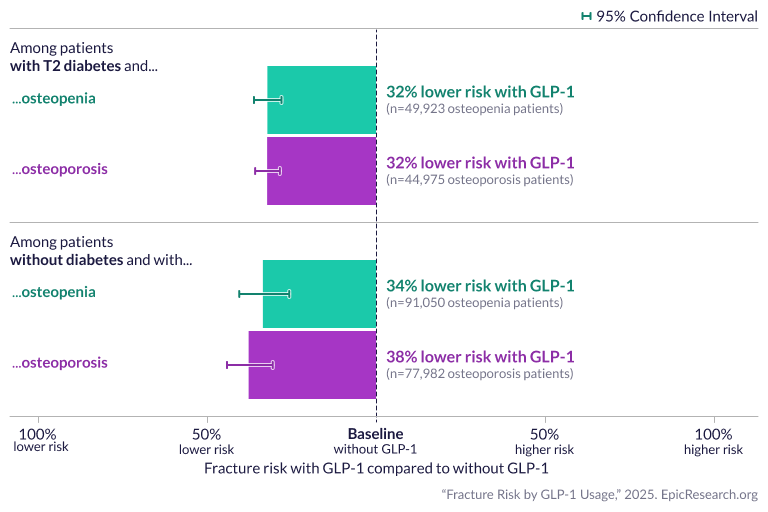
The recent coverage is based on research that suggests people with type 2 diabetes who use GLP-1 receptor agonists may have fewer fractures than expected. That is useful, but it is not the same as proving the drug protects bone the way a bisphosphonate does. Association is not causation. That rule still applies.
GLP-1 drugs include medicines such as semaglutide, liraglutide, dulaglutide, and tirzepatide, though tirzepatide also acts on GIP receptors. These drugs lower blood sugar, help with weight loss, and can reduce cardiovascular risk in some patients. Bone outcomes sit in a different lane.
What matters most: a lower fracture rate in an observational study is encouraging, but it does not tell you why the rate changed.
Why diabetes and fractures are linked in the first place
People with type 2 diabetes often have a higher fracture risk than people without diabetes, even when bone density looks normal. That is part of what makes this topic tricky. Bones can be fragile for reasons that do not always show up on a scan.
Higher blood sugar, nerve damage, vision problems, and some diabetes medicines can all raise the chance of a fall or weaken the chain between bone strength and actual function. Think of it like a bridge. The steel matters, but so do the cables, the surface, and the traffic load. One weak part can still cause a collapse.
Weight loss can also change the equation. That matters because GLP-1 drugs often lead to meaningful weight loss, and rapid loss can sometimes reduce bone mass if nutrition and resistance training lag behind. The body keeps score.
GLP-1 drugs fracture risk: what might be driving the result?
Researchers have a few plausible explanations, and none of them should be treated as settled.
- Better glucose control may reduce bone stress over time.
- Lower inflammation could play a role, since chronic inflammation can affect bone remodeling.
- Weight loss may improve mobility and lower fall risk for some people.
- Behavior changes may matter too. People on GLP-1 drugs sometimes eat differently, move more, and get more regular care.
And here is the catch. A person who loses weight and starts walking daily may lower fracture risk because of the new habits, not because the drug itself is acting on bone tissue. That distinction is non-negotiable if you care about the science.
What you should ask if you take a GLP-1 drug
If you are already on a GLP-1 drug, do not use this news as a reason to stop or start treatment on your own. Use it as a reason to ask sharper questions at your next visit.
- Do I have other fracture risks, such as past breaks, low body weight, smoking, or steroid use?
- Should I be screened for osteoporosis or bone loss?
- Am I getting enough protein, calcium, and vitamin D?
- Should I add resistance training or balance work to my routine?
- Could my other medicines raise fall risk or affect bone health?
One practical move is to treat bone health like maintenance on a car. You do not wait for the engine light to flash before checking the oil. Same idea here. If you are losing weight on a GLP-1 drug, your clinician may want to keep an eye on muscle mass, nutrition, and activity levels too.
Who may need closer monitoring?
People who already have osteoporosis, a history of fragility fracture, frailty, or frequent falls should not treat this research as a green light to relax. They may need more active monitoring than someone at average risk. Older adults and postmenopausal women may also need a tighter plan.
Single studies can move the conversation, but they do not replace personalized care.
What the research still cannot tell you
The biggest gap is simple. We still do not know whether GLP-1 drugs directly improve bone strength, preserve bone density, or reduce fractures through a side effect of better overall health. Different study designs can point in different directions. That is normal science, not a flaw.
We also do not yet know which GLP-1 drug, dose, treatment length, or patient group might benefit most. A result in one population may not hold in another. That is why broad claims deserve a hard side-eye.
If a finding sounds cleaner than the data usually allow, it probably is.
What to do next with your own bone health
If you use a GLP-1 drug and want to protect your bones, keep the plan boring and solid.
- Eat enough protein.
- Get calcium and vitamin D from food or supplements if your clinician recommends them.
- Do resistance training two to three times a week if you can.
- Work on balance, especially if you have any fall risk.
- Review your medications for side effects like dizziness or low blood sugar.
The new GLP-1 drugs fracture risk research is worth watching, but your day-to-day habits still carry a lot of weight. That is the real story. Not hype. Not panic. Just the next question worth asking: if these drugs keep improving, what else will we learn about how metabolism and bone health are tied together?
Sources
This article was medically reviewed and draws from peer-reviewed research and clinical guidelines published by:
- National Institute on Drug Abuse (NIDA)
- Substance Abuse and Mental Health Services Administration (SAMHSA)
- Centers for Disease Control and Prevention (CDC)
- MedlinePlus — U.S. National Library of Medicine
Content is reviewed for medical accuracy by our editorial team. Last reviewed: August 12, 2026.
Medical Disclaimer: This article is for educational purposes only. It is not a substitute for professional medical advice, diagnosis, or treatment. Always consult a qualified healthcare provider before making changes to your treatment plan. If you are experiencing a medical emergency, call 911 immediately. For substance use support, call SAMHSA at 1-800-662-4357 (free, confidential, 24/7).