
Keratoconus: What Stephen Curry’s Eye Condition Teaches Patients
Keratoconus: What Stephen Curry’s Eye Condition Teaches Patients
Blurry vision is easy to blame on tired eyes, old glasses, or too much screen time. But for some people, the real issue is keratoconus, a progressive eye condition that changes the shape of the cornea and can distort vision. NBA star Stephen Curry has talked publicly about living with keratoconus, which pushed the condition into wider view after years of being poorly understood outside eye clinics. That matters because early care can slow damage and improve daily vision. If your prescription keeps changing, lights look stretched, or contacts never feel right, this is worth taking seriously. A routine eye exam may miss subtle cases, so you may need corneal imaging from an optometrist or ophthalmologist. The earlier you catch it, the more options you usually have.
What to know first
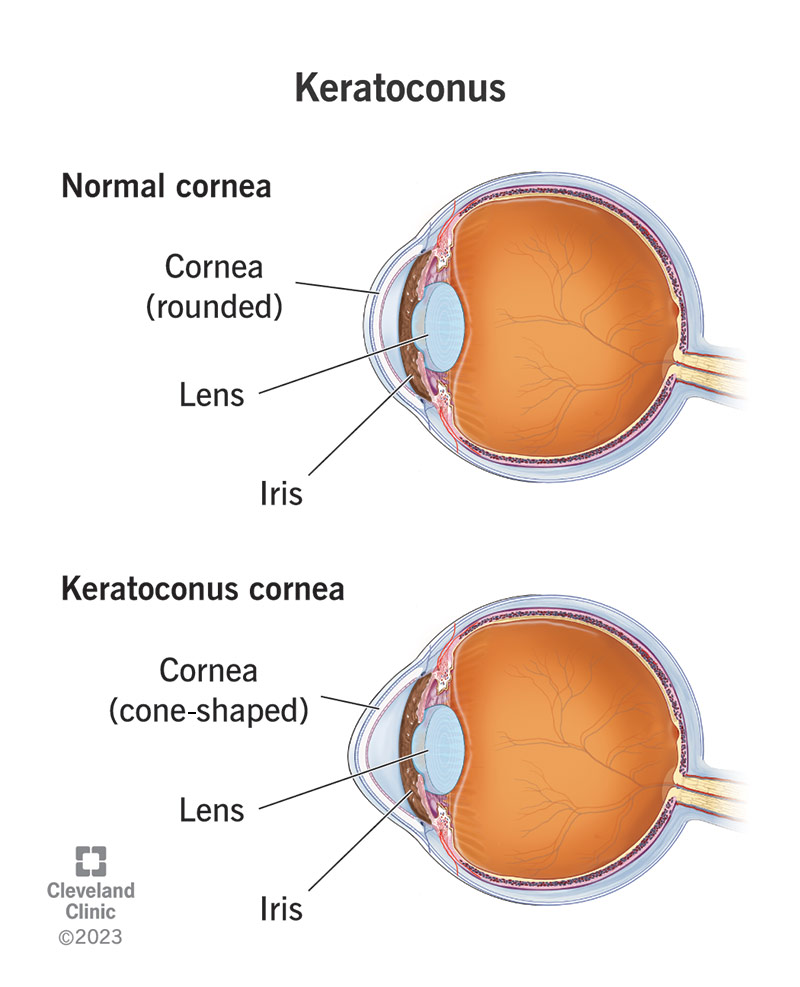
- Keratoconus makes the cornea thin and bulge into a cone-like shape, which can blur or distort vision.
- Stephen Curry has said special contact lenses helped correct his vision on the court.
- Early treatment may slow progression, especially corneal cross-linking.
- Frequent prescription changes, glare, halos, and poor night vision are common warning signs.
- Standard soft contacts may not work well as the condition advances.
What is keratoconus?
Keratoconus is a corneal disorder. The cornea is the clear front window of your eye, and it helps focus light onto the retina. In keratoconus, that window becomes thinner and starts to bulge outward, which bends light unevenly.
Think of it like a basketball with one soft spot. The ball may still hold air, but its shape is off, and every bounce becomes less predictable. With keratoconus, vision can shift in a similar way, with ghosting, streaking, double images, and unstable focus.
The condition often starts in the teens or 20s, though it can appear earlier or later. It usually affects both eyes, but one eye may be worse. According to the American Academy of Ophthalmology, keratoconus can progress for years before it stabilizes.
Why Stephen Curry’s keratoconus story matters
Healthline reported that Stephen Curry has lived with keratoconus and used specialized contact lenses to improve his vision. That detail caught attention because Curry is one of the best shooters in NBA history. If an elite athlete can miss visual sharpness until the right correction comes along, regular patients should not shrug off symptoms.
Look, celebrity health stories can get overblown. This one is useful because it points to a common problem in eye care: people adapt to bad vision until they think it is normal. Curry’s story gives patients a simple question to ask their eye doctor: Could my blurry or distorted vision be caused by my cornea?
“If your glasses prescription changes often, or your contacts never seem to give crisp vision, ask about corneal topography. That test can spot the shape changes linked to keratoconus.”
That is the practical takeaway.
Keratoconus symptoms you should not ignore
Keratoconus does not always announce itself with pain or redness. Many people first notice that their glasses stop working well. Others complain that nighttime driving feels harder than it used to.
Common symptoms
- Blurry or distorted vision
- Frequent changes in glasses or contact lens prescription
- Glare, halos, or streaks around lights
- Poor night vision
- Eye strain or headaches from squinting
- Double vision or ghost images in one eye
- Contact lenses that feel uncomfortable or move too much
What makes keratoconus tricky? Early symptoms can look like ordinary nearsightedness or astigmatism. But regular astigmatism is usually more stable, while keratoconus often keeps changing and becomes harder to correct with basic lenses.
How doctors diagnose keratoconus
A basic vision test can show that something is wrong, but it may not prove keratoconus. The more useful test is corneal topography or tomography, which maps the curve and thickness of the cornea. This imaging can show early thinning before vision loss becomes severe.
An eye doctor may also check visual acuity, refraction, corneal thickness, and the surface of the eye with a slit lamp. If keratoconus runs in your family, say so. Family history can raise suspicion, especially if symptoms start young.
Keratoconus treatment options
Treatment depends on severity, age, progression, and how well your vision can be corrected. The goal is simple: improve vision and stop the cornea from getting worse. Not every patient needs surgery, but waiting too long can narrow your choices.
Glasses and soft contact lenses
In mild cases, glasses or soft contacts may work. This is more likely when the cornea is only slightly irregular. But as the cone shape becomes more pronounced, standard lenses often fail to give sharp vision.
Rigid and specialty contact lenses
Many patients need rigid gas permeable lenses, hybrid lenses, or scleral lenses. Scleral lenses vault over the cornea and rest on the white part of the eye, creating a smoother focusing surface. These can be life-changing for people whose vision is poor with glasses.
They also require patience. Fitting specialty lenses is part science, part tailoring. You may need several visits to get the best comfort and clarity.
Corneal cross-linking
Corneal cross-linking is designed to slow or stop progression. During the procedure, an eye doctor applies riboflavin drops, then uses ultraviolet light to strengthen collagen fibers in the cornea. The U.S. Food and Drug Administration approved the first corneal cross-linking system for progressive keratoconus in 2016.
Cross-linking is not mainly a vision-correction procedure. Some people see improvement, but the main point is stability. That distinction matters because patients may still need glasses or specialty contacts afterward.
Corneal transplant
Advanced keratoconus can scar the cornea or make vision impossible to correct with lenses. In those cases, a corneal transplant may be considered. The National Eye Institute notes that transplant surgery is generally reserved for severe cases when other treatments no longer work well.
Who is at higher risk?
Keratoconus has several known risk factors, although not every patient fits a clear pattern. Genetics can play a role. Eye rubbing is also linked with progression, especially in people with allergies or chronic irritation.
- Family history of keratoconus
- Frequent or forceful eye rubbing
- Allergic eye disease
- Certain connective tissue conditions
- Young age at symptom onset
If you have itchy eyes, treat the itch instead of rubbing through it. Allergy drops, cold compresses, and medical care can help protect the cornea. It sounds small, but this habit can matter over time.
What to ask your eye doctor about keratoconus
If you suspect keratoconus, go in with direct questions. You do not need to sound like a medical textbook. You need clear answers about your cornea, your risk, and your next step.
- Do I have signs of corneal thinning or irregular astigmatism?
- Should I get corneal topography or tomography?
- Is my keratoconus stable or progressing?
- Am I a candidate for corneal cross-linking?
- Would scleral or rigid gas permeable lenses improve my vision?
- How often should my corneas be monitored?
Bring old prescriptions if you have them. A pattern of rapid change can help your doctor judge whether the condition is moving. And if you are getting vague answers, seek a cornea specialist.
The smart next move
Stephen Curry’s keratoconus story is not a reason to panic about every blurry day. It is a reason to stop accepting unstable vision as normal. If your glasses keep changing, night driving feels rough, or contacts never sit right, ask for corneal imaging and get a straight answer.
Vision is too useful to manage by guesswork.
Sources
This article was medically reviewed and draws from peer-reviewed research and clinical guidelines published by:
- National Institute on Drug Abuse (NIDA)
- Substance Abuse and Mental Health Services Administration (SAMHSA)
- Centers for Disease Control and Prevention (CDC)
- MedlinePlus — U.S. National Library of Medicine
Content is reviewed for medical accuracy by our editorial team. Last reviewed: September 26, 2026.
Medical Disclaimer: This article is for educational purposes only. It is not a substitute for professional medical advice, diagnosis, or treatment. Always consult a qualified healthcare provider before making changes to your treatment plan. If you are experiencing a medical emergency, call 911 immediately. For substance use support, call SAMHSA at 1-800-662-4357 (free, confidential, 24/7).