
Remote Monitoring for Heart Failure: What It Can and Cannot Do
Remote Monitoring for Heart Failure: What It Can and Cannot Do
Heart failure remote monitoring sounds simple. Put a patient on a device, collect data at home, and catch trouble before it turns into a hospital stay. But the real world is messier. Alerts pile up. Data can be noisy. And if no one acts on the numbers, the numbers do not help much. That is why heart failure remote monitoring matters now. More patients are being managed at home, clinics are stretched thin, and small changes in weight, rhythm, or symptoms can mean a big shift in risk.
Used well, remote monitoring can give you earlier warning and tighter follow-up. Used badly, it becomes another dashboard nobody trusts. What should you expect from it, and where does the hype fall apart?
- Remote monitoring works best as an early warning system, not a replacement for care.
- Not every alert means danger. Clinical context matters.
- Patient engagement is non-negotiable. Devices cannot fix missed symptoms on their own.
- Teams need clear response plans or the data becomes clutter.
What heart failure remote monitoring actually tracks
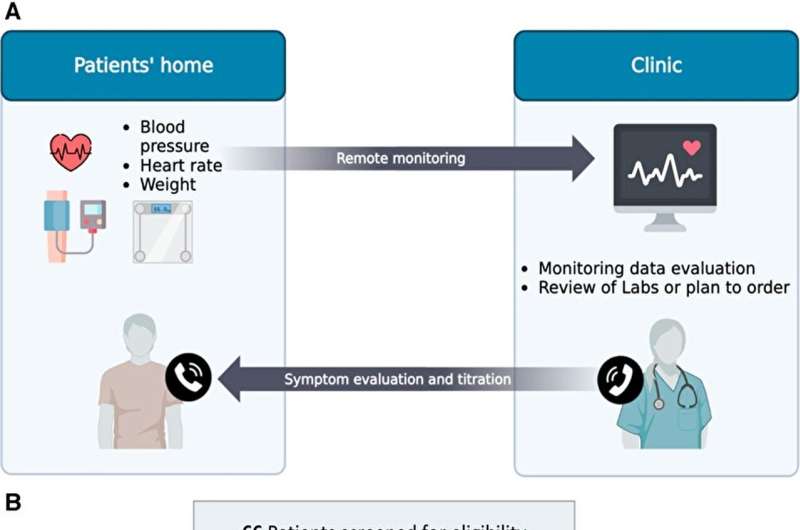
Remote monitoring can include weight scales, blood pressure cuffs, implantable cardiac devices, pulse oximetry, and symptom check-ins through apps or phone calls. Some systems watch for fluid buildup. Others track heart rate, rhythm changes, or activity patterns.
The goal is straightforward. Catch a worsening trend before the patient needs emergency care. Think of it like a home smoke detector, not a firefighter. It can warn you early, but someone still has to respond.
A good monitoring system does not just collect data. It changes what happens next.
Why heart failure remote monitoring can help
Heart failure often gets worse in small steps before it gets bad enough to send someone to the hospital. A rising weight, lower activity, or a changing heart rhythm may show up days earlier. That gives the care team a chance to adjust diuretics, review sodium intake, or bring the patient in for evaluation.
Studies on remote monitoring have shown mixed results across different devices and care models, which is the part that tends to get glossed over. Some approaches help reduce admissions in selected groups. Others do not move the needle much because the workflow is weak, the alerts are too broad, or the patient never uses the device consistently.
So, does it work? Yes, sometimes. But only when the system is built around action, not surveillance.
Where the system breaks down
The biggest problem is not the device. It is the chain around the device.
- False alarms waste staff time and lower trust.
- Poor adherence means missing readings and gaps in the record.
- Data overload can bury the signal in noise.
- Unclear ownership leaves nobody responsible for acting fast.
Look, a clinic can have the best software in the world and still miss a patient if the inbox is a mess. That is the boring part of medicine that people skip in press releases. But it is the whole game.
There is also a patient side to this. Some people feel reassured by daily tracking. Others find it tiring or confusing, especially if they get mixed messages about what to do when a reading changes. If the plan is not simple, adherence drops fast.
How clinicians can make heart failure remote monitoring useful
Clinics get better results when they keep the plan tight. Here are the basics that matter most:
1. Set clear thresholds
Define which changes trigger a call, a medication review, or an office visit. If every small shift creates the same response, the team will drown in alerts.
2. Tie alerts to a workflow
Someone needs to review incoming data every day. Someone else needs authority to escalate care. No one should be guessing.
3. Teach the patient what the numbers mean
If a person does not know when to weigh themselves, how to place a cuff, or what symptoms to report, the data quality falls apart. A short, plain-language setup session can matter more than fancy hardware.
4. Watch for trends, not one-off readings
Heart failure changes over time. One strange measurement may mean nothing. Three days of the same pattern can mean a lot.
That is why good remote care feels a little like managing a kitchen during a dinner rush. You do not just stare at one pan. You watch the sequence, the timing, and which dish is about to burn.
What patients should ask before starting
If your care team offers remote monitoring, ask practical questions. Who reviews the data? How fast will someone call if a reading looks off? What should you do if you gain weight in two days or feel more short of breath?
Also ask what the device can actually tell you. Some systems are better at spotting fluid shifts. Others are better at tracking rhythm problems. No single tool covers everything (and anyone promising that is selling too hard).
You want a system that fits your routine, not one that adds friction to every morning.
What the latest coverage gets right
The recent reporting around heart failure remote monitoring gets one thing right. Home-based care is no longer a side project. It is part of mainstream management, and hospitals are under pressure to use it well.
The coverage also reflects a hard truth. Technology alone does not lower risk. The gain comes from a connected process. Device, patient, nurse, clinician, and follow-up all have to line up. Miss one piece and the benefit shrinks.
That is the part people should keep in view. Not every new monitor is a breakthrough. Some are just another tool that needs discipline, staffing, and a sane plan. Which is the real innovation here, the sensor or the system around it?
What to watch next
The next wave of heart failure remote monitoring will likely focus on smarter alerts, better integration with electronic health records, and clearer evidence about which patients benefit most. That matters because the best tool for a recently discharged patient may not be the best tool for someone with stable chronic disease.
For now, the smartest move is simple. Use remote monitoring to spot change early, keep the workflow tight, and keep expectations grounded. If you are a patient, ask how your team will act on the data. If you are a clinician, ask whether your current setup can answer before the patient gets worse.
Sources
This article was medically reviewed and draws from peer-reviewed research and clinical guidelines published by:
- National Institute on Drug Abuse (NIDA)
- Substance Abuse and Mental Health Services Administration (SAMHSA)
- Centers for Disease Control and Prevention (CDC)
- MedlinePlus — U.S. National Library of Medicine
Content is reviewed for medical accuracy by our editorial team. Last reviewed: July 26, 2026.
Medical Disclaimer: This article is for educational purposes only. It is not a substitute for professional medical advice, diagnosis, or treatment. Always consult a qualified healthcare provider before making changes to your treatment plan. If you are experiencing a medical emergency, call 911 immediately. For substance use support, call SAMHSA at 1-800-662-4357 (free, confidential, 24/7).