
SAMHSA 2025 Survey on Fentanyl Use: What the Numbers Actually Say
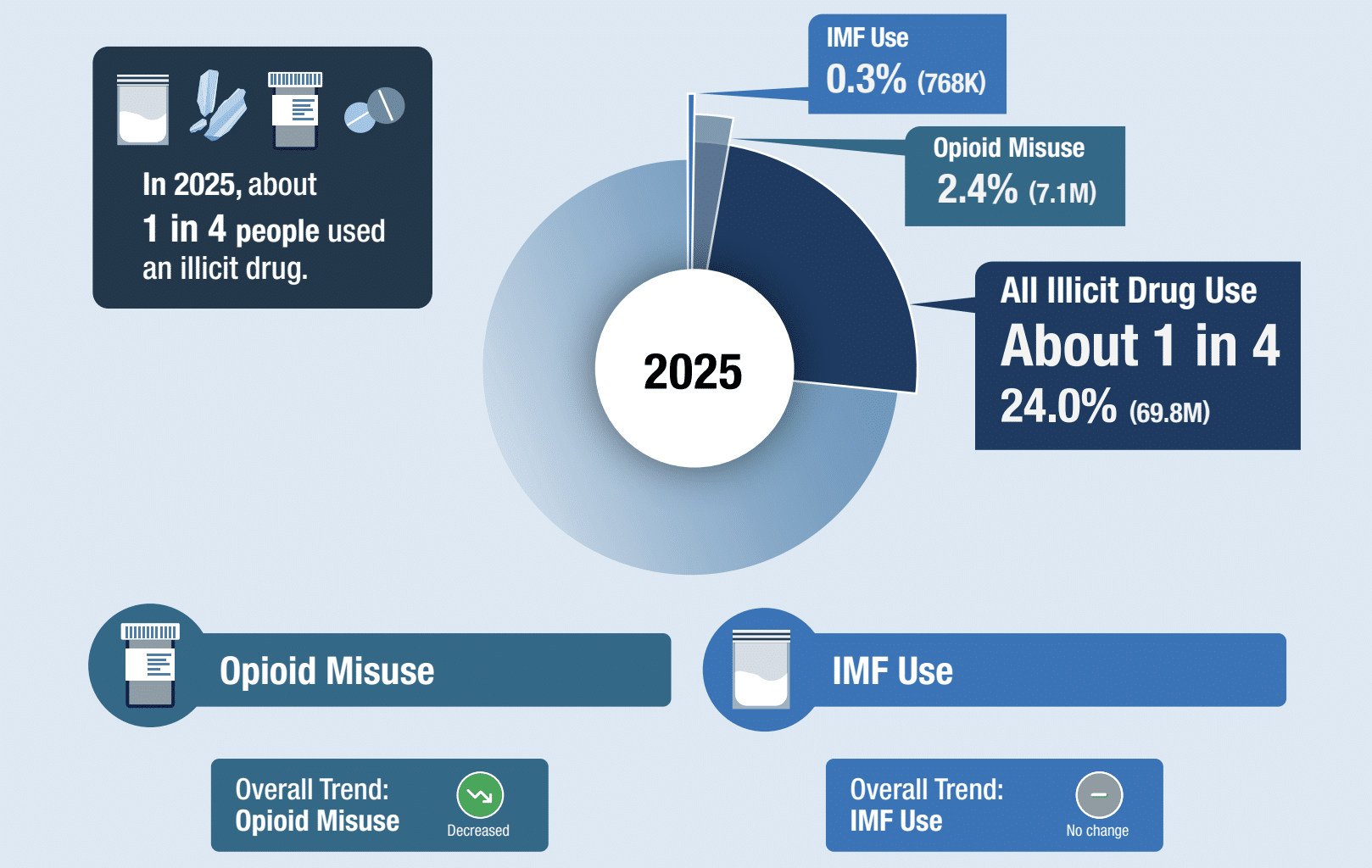
SAMHSA 2025 Survey on Fentanyl Use: What the Numbers Actually Say
You need a clear read on fentanyl risk because the public debate is still noisy, and the stakes are real. The SAMHSA 2025 National Drug Use and Health Survey matters because it helps separate trend lines from panic. If you only hear headlines about fentanyl, you miss the parts that shape policy, treatment, and overdose prevention.
Look, the hard part is not that fentanyl is dangerous. Everyone knows that. The hard part is understanding who is using it, how exposure happens, and where the system is still failing. Is use rising because people seek it out, or because it shows up inside other drugs? That difference changes everything.
- Fentanyl risk is often tied to the illicit supply, not direct intent.
- SAMHSA data helps track use patterns, treatment need, and overdose context.
- Prevention works best when it matches real exposure pathways.
- Testing, naloxone, and treatment access remain the practical response.
What the SAMHSA 2025 National Drug Use and Health Survey is meant to measure
The National Drug Use and Health Survey is one of the main federal tools for tracking substance use, mental health, and treatment need in the United States. SAMHSA uses it to estimate how many people use drugs, how many struggle with substance use disorders, and how many get care.
That makes it useful, but also easy to overread. A survey can show patterns, yet it cannot capture every local spike or every overdose tied to counterfeit pills. Think of it like a city traffic map. It shows flow and pressure points, but it does not show every pothole on every street.
Survey data is strongest when you use it to guide action, not to pretend the drug supply is neatly measurable.
What the SAMHSA 2025 National Drug Use and Health Survey means for fentanyl use
The big point is simple. Fentanyl is not a typical opioid problem. It now sits inside a wider overdose crisis that includes counterfeit pills, methamphetamine, and other drugs contaminated in the illicit market. That changes how you read any national survey on fentanyl use.
People may not know they have taken fentanyl. They may think they used oxycodone, alprazolam, or cocaine, and still be at risk for overdose. That is why the SAMHSA 2025 National Drug Use and Health Survey should be read alongside CDC overdose data, DEA warnings, and local toxicology reports, not instead of them.
Why direct use and hidden exposure are different problems
Direct fentanyl use can reflect dependence, tolerance, and high overdose risk. Hidden exposure points to supply contamination, weak drug checking access, and a market that keeps shifting under public health efforts. Same drug. Different response.
If your goal is fewer deaths, you need both angles. More treatment for people with opioid use disorder. More harm reduction for people who do not even know what they took. And yes, that includes naloxone in more hands, more often.
What policymakers should take from the survey
Policy often lags behind the data. That is the problem. Too many responses still treat fentanyl like a single-behavior issue, when the evidence points to a messy mix of dependence, supply contamination, and limited access to care.
- Expand treatment access. Medication for opioid use disorder, including buprenorphine and methadone, cuts overdose risk.
- Widen naloxone distribution. Put it in schools, libraries, shelters, jails, and community programs.
- Support drug checking. Fentanyl test strips and community alerts give people a chance to act before use turns fatal.
- Track local data. National numbers matter, but county and state trends tell you where risk is concentrated.
And here is the part many leaders avoid. Punishment alone does not stop fentanyl deaths. It can make people hide their use, delay care, and avoid calling 911. That is not a theory. It is a pattern seen over and over in overdose response work.
How to read fentanyl data without getting spun
Start with the source. SAMHSA survey data tells you about reported use and treatment need. CDC data tells you about deaths. DEA and forensic lab reporting tell you about supply trends. Put them together, or you will get a distorted picture.
Ask three questions every time you see a fentanyl stat:
- Does this measure self-reported use, overdose death, or toxicology findings?
- Does it capture hidden exposure in counterfeit or mixed drugs?
- Does it show where people can get help, or only where harm is happening?
That approach keeps you from chasing the loudest number in the room. It also keeps the conversation grounded in what can be changed now.
What this means for people on the ground
For families, the message is blunt. Do not wait for perfect information before acting. Carry naloxone. Learn overdose signs. Talk about counterfeit pills. If someone uses drugs, treat fentanyl risk as present even when the drug was not bought as fentanyl.
For treatment providers, the survey should reinforce a basic truth. Many people at risk do not fit a neat stereotype. Some use opioids daily. Some do not. Some are trying to cut back. Some are using stimulants and have no idea fentanyl is in the mix. One-size-fits-all messaging misses them.
For public health teams, the work is practical. Meet people where they are. Test supplies where possible. Keep naloxone visible. Make treatment easy to start. Why keep pretending education alone can fix a contaminated market?
Where the next shift may come from
The next useful move is better linkage between survey data, overdose surveillance, and local drug checking. That would give a cleaner picture of exposure patterns and help communities respond faster. It would also stop policymakers from leaning on national averages when the real danger is clustered in specific neighborhoods, age groups, or drug markets.
That is where this conversation is headed. Not toward perfect certainty. Toward faster, sharper response. And that is the test for the SAMHSA 2025 National Drug Use and Health Survey: does it help people act before the next overdose, or just explain it afterward?
Sources
This article was medically reviewed and draws from peer-reviewed research and clinical guidelines published by:
- National Institute on Drug Abuse (NIDA)
- Substance Abuse and Mental Health Services Administration (SAMHSA)
- Centers for Disease Control and Prevention (CDC)
- MedlinePlus — U.S. National Library of Medicine
Content is reviewed for medical accuracy by our editorial team. Last reviewed: August 5, 2026.
Medical Disclaimer: This article is for educational purposes only. It is not a substitute for professional medical advice, diagnosis, or treatment. Always consult a qualified healthcare provider before making changes to your treatment plan. If you are experiencing a medical emergency, call 911 immediately. For substance use support, call SAMHSA at 1-800-662-4357 (free, confidential, 24/7).