
Shingles Pain: What Viola Davis Wants People to Know
Shingles Pain: What Viola Davis Wants People to Know
You may think of shingles as a rash that clears up with time. That misses the real problem. Shingles pain can be sharp, burning, and hard to predict, and actor Viola Davis has described how it changed her daily life in a Healthline interview. Her story matters now because shingles is common, preventable, and often misunderstood. The Centers for Disease Control and Prevention says about 1 in 3 people in the United States will develop shingles during their lifetime. Risk rises with age, stress, illness, and a weaker immune system. And once nerve pain sets in, it can outlast the rash. So what should you do if you had chickenpox years ago and assume you are in the clear? Start by knowing what shingles feels like, when to act, and how prevention works.
What stands out
- Shingles comes from the same virus that causes chickenpox. The virus can stay quiet in your nerves for decades.
- Shingles pain may arrive before the rash. Some people feel burning, tingling, or stabbing pain first.
- Early treatment matters. Antiviral medicine works best when started within 72 hours of rash onset.
- Vaccination can cut risk. CDC guidance recommends Shingrix for adults 50 and older, and for some immunocompromised adults 19 and older.
Why shingles pain gets dismissed
Healthline reported that Davis spoke about shingles as more than a skin problem. That framing is useful because the rash is visible, while nerve pain is not. People see red blisters and assume the story ends there, but the virus irritates nerves under the skin.
I have covered enough celebrity health campaigns to be wary of glossy awareness pushes. Some are thin. This one hits a real gap because shingles can leave people confused, scared, and late to treatment.
Shingles is not just a rash you wait out. It is a nerve infection with a skin signal.
That is why personal accounts can help. If a high-profile actor says the pain disrupted her life, it gives regular patients language for what they may feel. A rash on one side of the torso, face, or neck, plus burning pain, is not something to shrug off.
What shingles pain actually feels like
People describe shingles pain in different ways. Some say it burns like a hot wire under the skin. Others feel stabbing jolts, deep aching, itching, or extreme sensitivity when clothing touches the area.
Symptoms often affect one side of the body because the virus follows a nerve path. Think of it like a fault line in a wall, not paint spilled across the whole room. The pattern is often narrow, one-sided, and oddly specific.
Common signs include:
- Pain, tingling, itching, or numbness before a rash appears
- A red rash that often forms blisters
- Sensitivity to touch
- Fever, chills, headache, or fatigue
- Pain around the eye or face, which needs fast medical care
Eye symptoms deserve special attention. Shingles near the eye can threaten vision, so same-day medical advice is the safer move. Do not wait to see if it settles down.
Why shingles pain can last after the rash fades
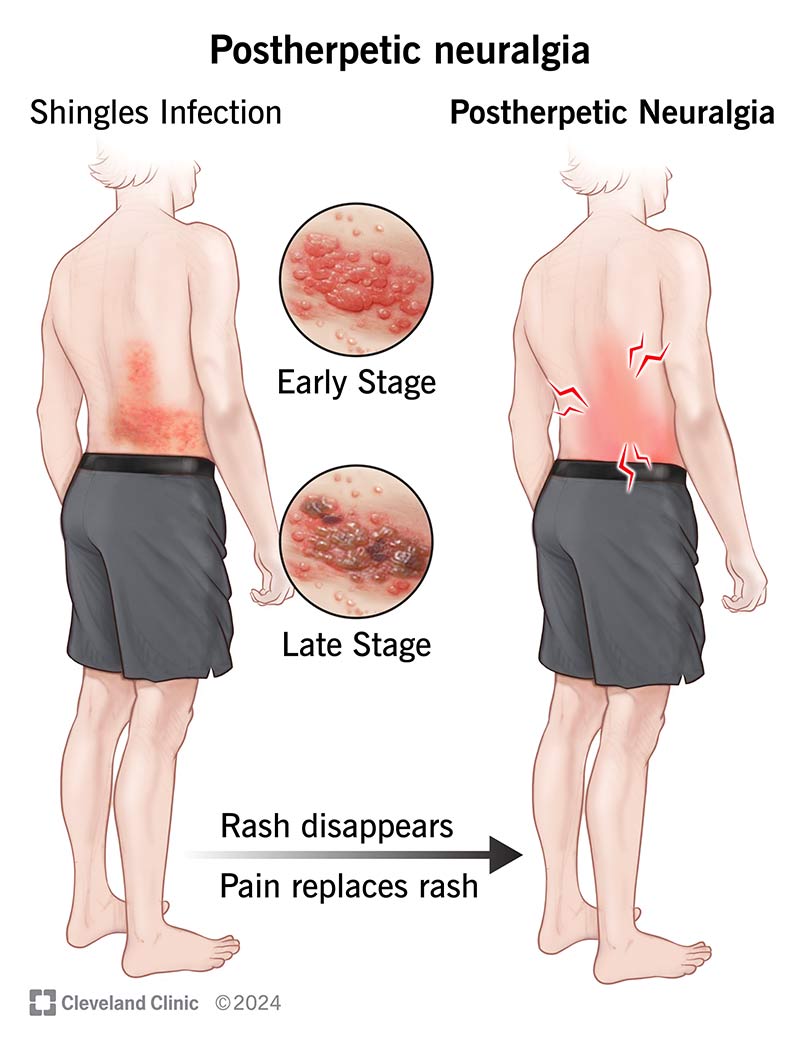
The most feared complication is postherpetic neuralgia, often called PHN. It is nerve pain that continues after the skin heals. The CDC says the risk of PHN rises with age, especially after 60.
That is the part people underestimate.
PHN can make normal life feel smaller. Sleep gets harder, showers may hurt, and a shirt rubbing against the skin can feel unbearable. For some people, the pain lasts weeks. For others, it can persist for months or longer.
Here is the practical point. Fast treatment may reduce the severity and length of symptoms, though it cannot promise a perfect outcome. If you suspect shingles, call a clinician quickly rather than waiting for a full rash to bloom.
Who has the highest risk?
Anyone who has had chickenpox can get shingles. That includes many adults who barely remember being sick as children. The varicella-zoster virus can remain dormant in nerve tissue, then reactivate later.
Risk is higher if you:
- Are 50 or older
- Have a weakened immune system
- Take immune-suppressing medicine
- Have had cancer treatment, an organ transplant, or certain chronic illnesses
- Are under heavy physical or emotional stress
Stress gets mentioned a lot, and it should be handled carefully. Stress alone does not explain every shingles case. But it can affect immune function, and many patients report an outbreak after a punishing stretch of life.
How to lower shingles pain risk before it starts
The most direct prevention tool is vaccination. The CDC recommends two doses of Shingrix for adults 50 and older, even if they had shingles before or do not remember having chickenpox. The agency also recommends it for adults 19 and older who are immunocompromised because of disease or therapy.
Shingrix is not a treatment for an active outbreak. It is a prevention step. If you are currently sick, your clinician may ask you to wait before getting vaccinated.
Ask your doctor or pharmacist three plain questions:
- Am I eligible for the shingles vaccine now?
- Do any of my medicines affect vaccine timing?
- If I already had shingles, when should I schedule vaccination?
Insurance coverage can vary by age, plan, and pharmacy benefit. Medicare Part D covers Shingrix, and many private plans cover it for eligible adults. Still, check before booking if cost could be a barrier.
What to do if you think shingles has started
Speed matters. Antiviral medicines such as acyclovir, valacyclovir, or famciclovir are usually most useful when started within 72 hours after the rash appears. A clinician may still treat later in some cases, especially if new blisters are forming or the face is involved.
Do not scratch blisters. Keep the rash clean and covered, and avoid contact with people who are at higher risk from chickenpox exposure, including pregnant people who are not immune, newborns, and immunocompromised people. Shingles itself is not spread as shingles, but the virus from blisters can cause chickenpox in someone who is not immune.
For pain relief, your clinician may suggest over-the-counter pain medicine, topical options, or prescription nerve pain treatment. The right plan depends on your age, other conditions, and pain level. This is not a grit-your-teeth situation.
Why Viola Davis speaking up helps
Celebrity health stories can get messy when they blur science with branding. But Davis putting shingles pain into plain language gives people a useful entry point. It tells someone at home, maybe staring at a strange one-sided rash, that this deserves attention.
Honestly, that may be the strongest value of her story. It moves shingles out of the vague category of old TV commercials and into real life. Pain changes work, sleep, mood, and patience with the people around you.
If you are eligible, ask about vaccination before you are dealing with blisters and nerve pain. And if symptoms have already started, call quickly. The window for easier treatment is short, and shingles does not care how busy your week looks.
The next smart move
Check your vaccine status, especially if you are over 50 or immunocompromised. If you are helping a parent, partner, or patient, make the question specific: Have you had the two-dose shingles vaccine? A five-minute call to a pharmacy may prevent weeks of pain. Why wait for the virus to remind you it is still there?
Sources
This article was medically reviewed and draws from peer-reviewed research and clinical guidelines published by:
- National Institute on Drug Abuse (NIDA)
- Substance Abuse and Mental Health Services Administration (SAMHSA)
- Centers for Disease Control and Prevention (CDC)
- MedlinePlus — U.S. National Library of Medicine
Content is reviewed for medical accuracy by our editorial team. Last reviewed: October 13, 2026.
Medical Disclaimer: This article is for educational purposes only. It is not a substitute for professional medical advice, diagnosis, or treatment. Always consult a qualified healthcare provider before making changes to your treatment plan. If you are experiencing a medical emergency, call 911 immediately. For substance use support, call SAMHSA at 1-800-662-4357 (free, confidential, 24/7).