
Synthetic Drug Overdose Deaths Are Rising
Synthetic Drug Overdose Deaths Are Rising
You may have seen headlines saying overdose deaths are finally dropping. That sounds like relief, and in part it is. But the bigger story is messier. Synthetic drug overdose deaths are still a serious threat, even as total U.S. overdose deaths show signs of decline. If you or someone close to you uses street pills, cocaine, meth, or opioids, that shift matters right now because the supply is changing faster than public awareness. One batch can look familiar and still carry fentanyl or other synthetic compounds. That raises the odds of a medical emergency, even for people who do not think of themselves as opioid users. So what should you pay attention to? The short answer is this: broad progress can hide narrow spikes, and synthetic drugs are where much of the danger now sits.
What stands out right now
- Overall overdose deaths have fallen from recent peaks, but synthetic opioids still drive a large share of fatalities.
- Fentanyl remains the central risk because it is potent, cheap to mix, and common in counterfeit pills and other street drugs.
- Regional and drug-specific trends do not all move in the same direction. A national drop can still mask local surges.
- Fast action matters. Naloxone, drug checking tools, and treatment access can change outcomes.
Why synthetic drug overdose deaths still matter
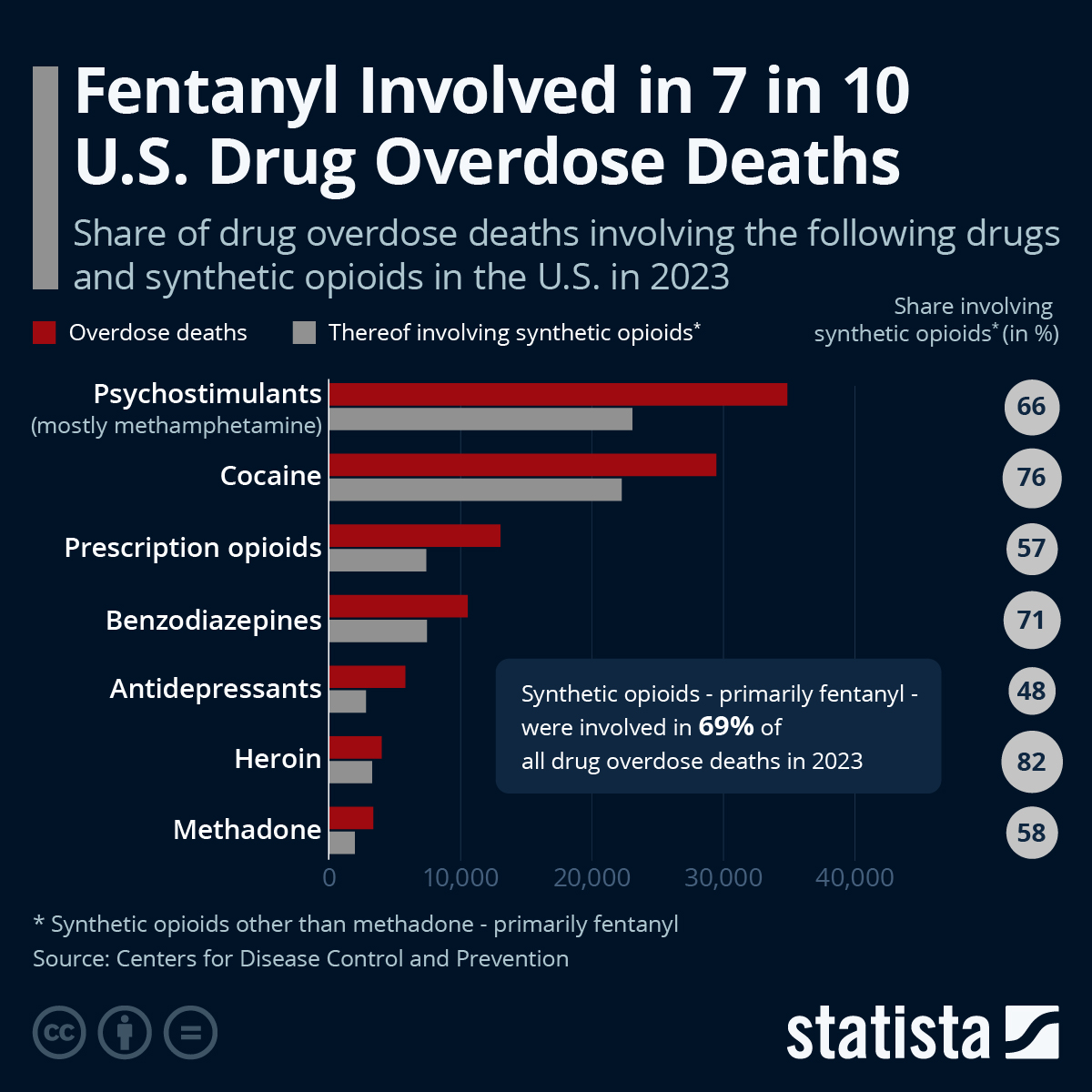
The national numbers have improved, but this is no time for a victory lap. Data covered by The Recovery Village points to a drop in total overdose deaths while warning that synthetic drugs continue to shape the crisis. That tracks with CDC reporting over the past few years, which has shown synthetic opioids, mainly illicit fentanyl, as the leading driver of overdose deaths in the United States.
Look, averages can fool you. If deaths tied to one drug category fall while another stays stubbornly high, families still face the same 2 a.m. phone call. And synthetic substances are especially hard to track because they move through illegal markets with very little quality control.
Overall overdose deaths may be easing, but synthetic opioids, especially fentanyl, remain at the center of the overdose crisis.
Synthetic drug overdose deaths and the fentanyl problem
Fentanyl changed the math. It is far more potent than morphine, and illicit manufacturers mix it into heroin, counterfeit prescription pills, cocaine, and other drugs because it is cheap and compact to transport. That makes the risk less predictable for every kind of user, including people who are not seeking opioids at all.
Think of it like a kitchen where one mislabeled ingredient ends up in every dish. Even if you order something mild, you can still get the dangerous part. That is a blunt comparison, but it fits.
Many people still assume overdose risk belongs mainly to heroin use. That is outdated. Counterfeit pills made to look like oxycodone, Xanax, or other medications can contain fentanyl in uneven amounts, which means one pill may be survivable and the next may not be.
Why this keeps happening
- Illicit fentanyl is cheap to produce and easy to move.
- Dealers can press it into pills that resemble real medications.
- Users often do not know what is actually in the product.
- Tiny dose changes can have fatal effects.
What the decline in overall overdose deaths does not tell you
A national decline is good news. It may reflect wider naloxone access, stronger public awareness, changes in drug use patterns, and more treatment outreach. But broad numbers rarely explain where the risk is shifting. Are deaths falling in one age group while rising in another? Is one region improving while another gets hit harder? Those details matter more than a single top-line graph.
This is the part people miss.
Synthetic drug overdose deaths can remain high even when total fatalities drop because the crisis is not one thing. It is a stack of overlapping problems, including opioids, stimulants, counterfeit pills, polysubstance use, and uneven access to care. Honestly, anyone covering this beat for years has seen the same cycle. The headline gets simpler just as the ground gets more complicated.
Who faces the biggest risk from synthetic drug overdose deaths
The obvious answer is people using illicit opioids. But the risk pool is wider now. People who buy pills outside a pharmacy, use cocaine socially, or return to drug use after a period of abstinence may face high overdose risk because tolerance changes and contamination is common.
That includes young adults who think they are taking a familiar pill at a party. It includes people in recovery who relapse and use the amount they once handled. And it includes communities where emergency response times are slower (rural counties often get hit here).
High-risk situations to watch
- Using alone
- Buying pills from friends, apps, or street sources
- Mixing opioids with alcohol or benzodiazepines
- Returning to use after detox, jail, or rehab
- Using cocaine or meth that may be contaminated with fentanyl
What you can do right now
You do not need a public policy job to reduce risk. A few practical steps can make a real difference.
- Carry naloxone. If opioids might be involved, naloxone should be close by. Many pharmacies, community groups, and health departments offer it without much friction.
- Do not use alone. If that is not realistic, use a phone check-in system or an overdose prevention line where available.
- Use fentanyl test strips if you can get them. They are not perfect, but they can flag danger in some drug supplies.
- Avoid counterfeit pills. If a pill did not come from a licensed pharmacy, assume it may contain something else.
- Know treatment options. Medications for opioid use disorder, such as buprenorphine and methadone, have strong evidence behind them.
But here is the harder truth. Risk reduction is necessary, yet treatment is still the steadier path when substance use starts running your life.
What treatment and recovery look like in this phase of the crisis
People often hear “treatment” and picture one fixed model. Real care is more varied than that. Effective options can include medical detox, inpatient rehab, outpatient treatment, therapy, peer support, and medication-assisted treatment for opioid use disorder.
The strongest programs adjust to the person, not the other way around. Someone using fentanyl may need medication support and close follow-up because withdrawal can feel different than people expect, and relapse after a short break can be deadly.
If you are trying to help a loved one, keep your focus narrow and practical:
- Ask what they are using, how often, and whether they have overdosed before.
- Make sure naloxone is in the house and that people know how to use it.
- Help them find an assessment from a licensed treatment provider.
- Treat relapse as a medical risk, not a moral failure.
Where this heads next
The overdose story is getting less catastrophic at the national level, and that matters. But the rise and persistence of synthetic drug overdose deaths should keep everyone skeptical of easy narratives. Progress is real. So is the danger sitting inside the current drug supply.
If there is a smart next step, it is this: pay less attention to feel-good national summaries and more attention to what is actually circulating in your community. The people who adapt fastest usually save the most lives. Will public messaging keep up?
Sources
This article was medically reviewed and draws from peer-reviewed research and clinical guidelines published by:
- National Institute on Drug Abuse (NIDA)
- Substance Abuse and Mental Health Services Administration (SAMHSA)
- Centers for Disease Control and Prevention (CDC)
- MedlinePlus — U.S. National Library of Medicine
Content is reviewed for medical accuracy by our editorial team. Last reviewed: May 24, 2026.
Medical Disclaimer: This article is for educational purposes only. It is not a substitute for professional medical advice, diagnosis, or treatment. Always consult a qualified healthcare provider before making changes to your treatment plan. If you are experiencing a medical emergency, call 911 immediately. For substance use support, call SAMHSA at 1-800-662-4357 (free, confidential, 24/7).