
Trump Rx Generic Medications Plan Explained
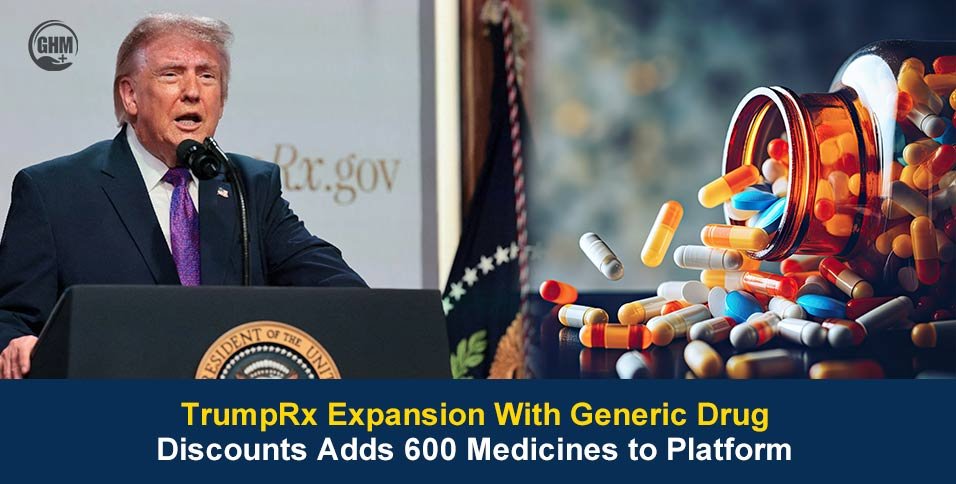
Trump Rx Generic Medications Plan Explained
If you pay cash for prescriptions, or your insurance keeps shifting costs onto you, any promise to cut drug prices gets your attention fast. The Trump Rx generic medications push did exactly that. It framed imported generics as a quick fix for Americans who face higher prices than patients in many other countries. That matters now because drug affordability is still a daily problem, especially for people managing pain, mental health conditions, opioid use disorder, or other chronic needs that depend on steady access to medication. But did the idea match the reality? And would it have helped the people under the most pressure? Here’s the thing. The policy talk sounded simple, yet the real barriers sit inside patent fights, FDA rules, supply chains, pharmacy benefit managers, and plain old politics.
What matters most
- Trump Rx generic medications centered on importing lower-cost drugs, especially from Canada.
- The headline promise was lower prices, but supply and legal barriers limited how far that could go.
- Generic competition does lower prices in many cases, though not every drug has real competition.
- Patients should watch policy details, not slogans, because access depends on manufacturing, approvals, and insurance rules.
What was the Trump Rx generic medications proposal?
The basic pitch was straightforward. Let Americans access lower-cost prescription drugs from abroad, with Canada getting most of the attention, and use that pressure to force better prices at home.
Supporters cast it as common sense. If a generic medication is approved and sold more cheaply in another advanced market, why should a US patient pay more?
That question lands because the US does pay unusually high drug prices. Data from RAND has repeatedly found that US prescription prices exceed those in peer nations, with branded drugs driving much of the gap. Generics are often cheaper in the US than brands by a wide margin, but some off-patent drugs still stay expensive because competition is thin or blocked.
Drug pricing debates often sell speed. The system usually runs on delay.
Filter’s reporting focused on the gap between the political branding and the likely impact. Importation sounds like a direct route around price gouging, but it runs into several hard limits at once.
Why Trump Rx generic medications sounded good to voters
People know what a pharmacy counter feels like. They know the shock of seeing a refill jump in price with no warning. So a plan built around lower-cost generics is easy to understand.
And generic drugs do matter. According to the Association for Accessible Medicines, generics account for the vast majority of US prescriptions dispensed, often around 90 percent, while making up a far smaller share of spending. That is the quiet truth of the market. Generics already do most of the heavy lifting.
Still, there is a catch. The savings are strongest when several manufacturers compete. If only one or two companies make a drug, prices can stay stubbornly high. Think of it like a grocery aisle with one store brand instead of six. The label says “discount,” but the shelf does not really force anyone to cut the price.
Where the plan ran into trouble
Canada cannot supply the whole US market
This was one of the biggest weaknesses. Canada has a much smaller population and drug supply. Its market was never built to stock the needs of the United States.
Canadian officials have pushed back on large-scale export schemes for exactly that reason. If US buyers drained the supply, Canadian patients could face shortages. That makes broad importation politically shaky and logistically messy.
FDA and safety rules are real hurdles
Drug importation is not just a truck crossing a border. Products have to meet FDA requirements, move through approved channels, and maintain chain-of-custody controls. For some medicines, especially temperature-sensitive or tightly regulated products, this gets complicated fast.
And no, that does not mean importation is impossible. It means the “flip a switch and prices drop tomorrow” version was never credible.
Middlemen still shape what you pay
Even if cheaper products enter the system, patients do not automatically see the full savings. Pharmacy benefit managers, insurers, wholesalers, and pharmacy contracts all affect the final price. A lower acquisition cost can help, but it does not guarantee a lower copay or cash price.
Honestly, this is where many pricing promises fall apart. They target one part of the machine while the rest keeps grinding.
What actually lowers generic drug prices?
If you want practical answers, focus on mechanisms that have a track record.
- More approved competitors. FDA approvals matter most when they create real market pressure.
- Faster action on anti-competitive tactics. Patent thickets, pay-for-delay deals, and restricted distribution can stall generic entry.
- Better supply resilience. Shortages can send prices up or limit access even when a drug is technically generic.
- Clearer pharmacy pricing. Patients need to know whether cash, coupon, or insurance offers the best price.
One sentence matters here.
Generic access is a competition story more than a campaign story.
What this means for addiction treatment and other essential medications
This is where the issue stops being abstract. For people in addiction treatment, unstable medication access can blow up recovery plans. Buprenorphine, naloxone, antidepressants, sleep aids, and other common prescriptions work only if patients can get them consistently.
Price swings, prior authorization fights, and shortages all create risk. And for someone already dealing with withdrawal, relapse pressure, or housing instability, even a small delay can carry a heavy cost.
That is why broad price rhetoric needs a harder test. Does a proposal improve access for medications people need every month, or does it mostly generate headlines?
Look, policy should be judged the way you judge a bridge. Not by the ribbon-cutting, but by whether it holds weight day after day.
How to read future Trump Rx generic medications claims
If similar proposals return, and they probably will, use a short checklist.
- Does the plan name which drugs are affected?
- Does it explain how FDA compliance will work?
- Does it address Canadian or foreign supply limits?
- Does it say how savings reach the patient at the pharmacy counter?
- Does it deal with PBMs, patents, or market concentration?
If those answers are missing, the policy is still at the slogan stage.
What patients can do right now
You cannot rewrite federal drug law on your lunch break. But you can reduce some of the damage from a messy pricing system.
Practical steps
- Ask your pharmacist for the cash price and the insurance price. They are not always the same.
- Check whether a different generic manufacturer is available if one version is expensive or out of stock.
- For long-term treatment, ask your clinician to prescribe before you run low, especially if shortages are circulating.
- Use state and manufacturer assistance tools where they apply, though they vary a lot.
- For addiction treatment medications, ask local programs and harm reduction groups about low-cost access paths.
Small moves, yes. But sometimes small moves are the difference between a refill and a lapse.
What to watch next
The debate over Trump Rx generic medications exposed a real public demand. People want lower prices, and they are tired of being told to wait while every part of the supply chain takes a cut. Fair enough.
But the strongest fixes tend to be less flashy. More competition. Fewer legal blockades. Stronger oversight of middlemen. Better shortage planning. That is not a thrilling stump speech, yet it is closer to the truth.
The next time a politician says generic importation will solve the drug pricing mess, ask the obvious question. Lower prices for whom, and by what mechanism?
Sources
This article was medically reviewed and draws from peer-reviewed research and clinical guidelines published by:
- National Institute on Drug Abuse (NIDA)
- Substance Abuse and Mental Health Services Administration (SAMHSA)
- Centers for Disease Control and Prevention (CDC)
- MedlinePlus — U.S. National Library of Medicine
Content is reviewed for medical accuracy by our editorial team. Last reviewed: May 21, 2026.
Medical Disclaimer: This article is for educational purposes only. It is not a substitute for professional medical advice, diagnosis, or treatment. Always consult a qualified healthcare provider before making changes to your treatment plan. If you are experiencing a medical emergency, call 911 immediately. For substance use support, call SAMHSA at 1-800-662-4357 (free, confidential, 24/7).